As of 27 October 2025, new reforms will force social landlords to address emergency hazards in their housing stock within 24 hours.
This is the first phase of Awaab’s Law, named after two-year-old Awaab Ishak, who died from a respiratory condition in 2020 due to prolonged exposure to mould in his home in Rochdale, due to “a lack of proactive treatment of the mould and a lack of consideration of the ineffective ventilation” within the family’s home.
Watch the Video
Under Phase One, landlords in the social rented sector must urgently fix emergency health and safety hazards within 24 hours of a tenant’s reporting.
An emergency hazard is defined under the law as “a relevant hazard that poses an imminent and significant risk of harm to the health or safety of an occupier of the social home.”
Significant mould and damp must be investigated within ten working days, with a written summary of the findings provided to the tenant within three working days. Work must be undertaken to fix the issue within five working days. Landlords who are unable to complete this work must secure suitable alternative accommodation at their expense until the work is complete.
Phase two of the legislation will cover additional hazards to tenants such as excess cold and heat, fire and electrical risks and hygiene hazards. Phase three will cover all remaining hazards covered by the Housing Health and Safety Rating System, but it will not address overcrowding.
Guidance for Landlords and Tenants on How to Manage Mould Growth
ThisWeekinFM Strategic Partner SFG20, the industry standard for building maintenance, has shared some insights on growing concerns around black mould in rental properties and guidance for landlords and tenants on how to manage mould growth.
Jason Instrell, Industry Lead at SFG20 said: "Damp is often caused by a lack of air circulation. The key is to ensure the property is well-ventilated and that there is consistent air movement, both before a property is let and during a tenancy. There are a number of general maintenance tasks that building owners, landlords and tenants can easily carry out to help prevent mould and control its growth?”
“From a top level, tenants must be responsible for ensuring they are helping with effective day-to-day ventilation of their property. This includes, but is not limited to:
Avoiding drying clothes indoors, especially on radiators
Using dehumidifiers to reduce internal moisture in the property
Clean cooker hood grills and filters to ensure efficient air extraction
When cooking, make sure hot air is venting out.
“However, Panorama’s discussions with tenants suffering from mould confirmed that most have already followed the guidance to ensure consistent ventilation in their rental properties. In certain cases, black mould this severe could be caused by defects in a building’s fabric, perhaps due to moisture ingress, something that tenants have no control over.
“Proper maintenance and inspection of a property is crucial to prevent mould growth, impacting some three million households”
What Can Landlords Do?
1. General Visual Inspections
Before landlords rent out a property, a full inspection is carried out to check for defects. This includes a visual inspection for damp and mould growth that may be present from poor ventilation. This check should include:
Checking extract ventilation systems such as bathroom kitchen fans and MVHR systems.
Inspecting window vents to check they are working correctly and as intended.
Checking bathroom extraction fans for dirt and grime and excess noise.
2. Introduce Fans and Ventilation Systems
Implementing humidistat fans, which turn on automatically when they detect humidity in the air. These fans are a cost-efficient and effective way to reduce humidity.
Changing outdoor ventilation grills to a gravity flap grille, which expels damp air from inside the property and prevents cold air from being drawn in. These types of grilles stop cold air coming into the space and only operate when the fan is active.
A fan can also incorporate a motorised shutter that only opens when the fan is running and automatically closes, thus reducing drafts.
3. Damp Proofing
A damp inspection will cover elements such as internal walls and woodwork that can become saturated and damp if an issue arises with the damp-proof course (or lack of). An effective damp-proof course is essential for ensuring the property remains dry and stable and free from damp.
4. Windows
In addition, it is cost-effective to install trickle vents in the windows, which allow small amounts of cold air to enter the property, encouraging airflow to reduce dampness.
5. Internal Decoration
Regular inspection and maintenance of painted surfaces in sanitary areas, such as toilets or kitchens, including emulsion and gloss paint, can help maintain hygiene. Mould can be prevented by finding and fixing the issue, cleaning and introducing a specialist mould resistant paint prior to decorating. "
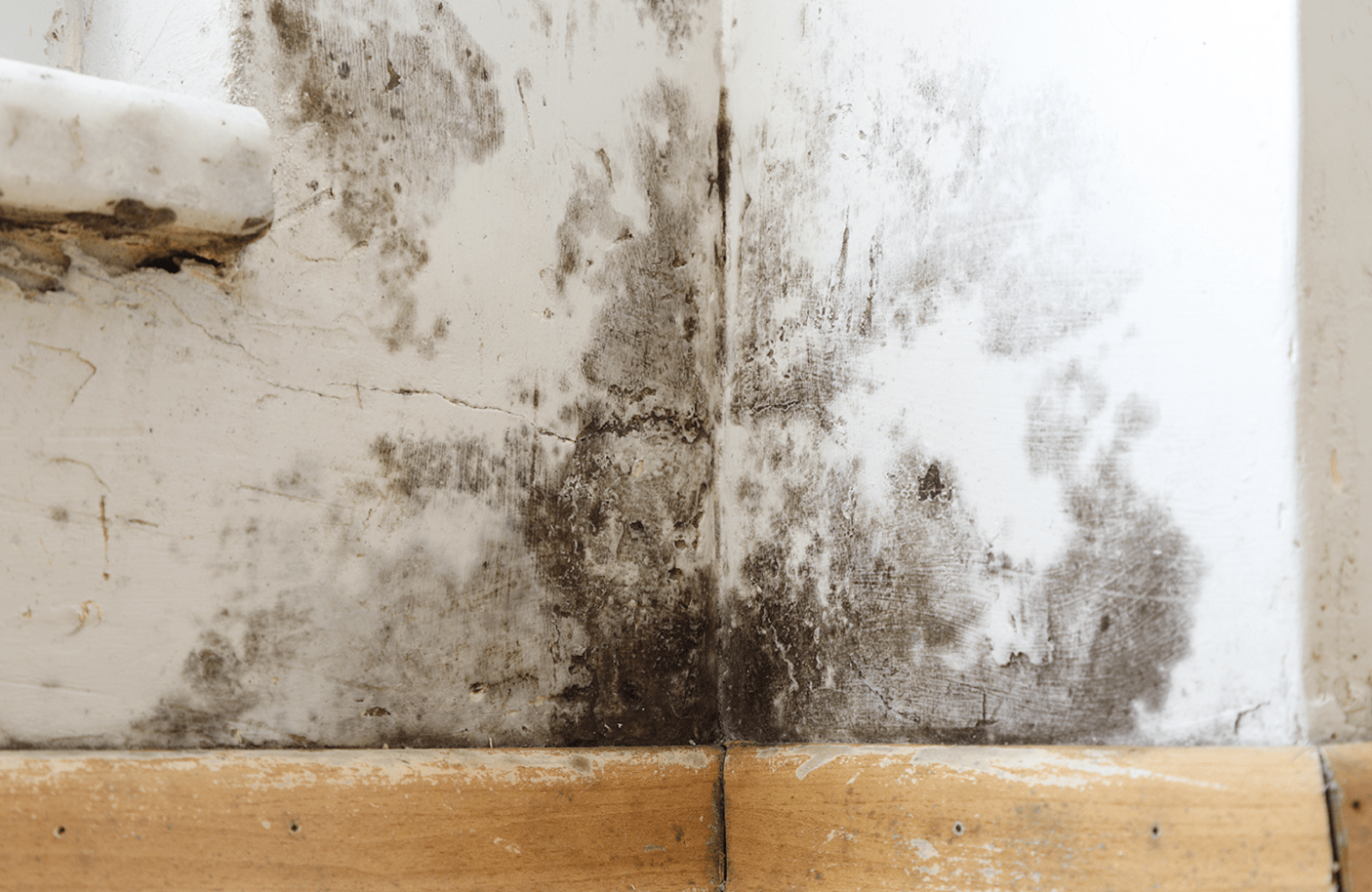
Picture: a photograph of the bottom corner of a room's walls, showing black mould above a wooden skirting board. Image Credit: Unsplash
Article written by Ella Tansley | Published 27 October 2025
Why Are One in Ten Social Rented Homes in England Still Failing Basic Standards?
The current record of slow compliance with the government’s Decent Homes Standard is raising questions about how quickly and effectively Awaab’s Law will...
Phase 1 of Awaab’s Law to Apply to Social Landlords from October 2025
Social landlords will be forced by law to investigate and fix dangerous mould and other emergency hazards in their housing stock.
From October 2025, social landlords...
Awaab’s Law Could Force Social Housing Providers to Address Damp and Mould Faster
A consultation has been launched to explore introducing strict time limits for social housing providers to address dangerous hazards such as damp and mould....
Regulator of Social Housing Reveals Increasing Focus on Stock Condition
Emma Mahy summarises the main findings of the final analysis of the Regulator of Social Housing’s report into damp and mould in social housing
Released on 28...
Poor Housing in England is Costing NHS £1.4 Billion a Year
A new report from the Building Research Establishment reveals that poor housing in the UK is costing the NHS £1.4 billion a year, with a further 2.6 million homes...
The temporary shutdown of a building can create hazards for returning occupants, one being mould where there is humidity and lack of ventilation.
Stuart Kerr,...
Daikin Applied (UK) Launches Flexible, Low-Carbon Ventilation Unit For Large Spaces
Daikin Applied (UK) has expanded its air handling unit portfolio with the launch of its new Vertical DX series, a floor-standing, plug-and-play solution designed to...
Housing Association Clarion Instructed Staff to Fake Fire Safety Notices
A Sky News investigation has revealed that a manager at Clarion Housing encouraged an employee to falsify a fire safety notice in one of the housing association’s...
Rinnai in Malta – Quality Products & Service, First Time Every Time
Energy Savings Solutions of Malta, headed by Franco Bileci, the sole suppliers of Rinnai heating & continuous flow hot water heating products, are approaching their 20th anniversary of successful trading on this jewelled island. Click Image To Read More
E-methane: What It Is - And Will It Become UK & EU Market Relevant?
Chris Goggin explains what E-methane is, how it is produced and its potential relevance inside the UK alternative gasses market. An informed synopsis of the progress that e-methane is making in becoming relevant will be used to highlight how e-methane can contribute towards carbon reduction aims. Click Image To Read More
MCFM Global Academy and Meetrooms Join Forces to Deliver FM Training Across Turkey And Europe
MCFM Global Academy is pleased to announce a strategic partnership with Meetrooms, a leading facilities management consultancy based in Istanbul, Turkey. Click Image To Read More
Recent military intervention in Iran has again highlighted the fragile economic and geopolitical foundations that the international fossil fuel market is based upon. Click Image To Read More
FM Qualifications at the College of Central London
Our mission is to provide skills and knowledge to help you achieve success in IWFM level 5 and 6. Click Image To Read More


.gif)
.gif)