SFG20 Launches Ratification And Compliance Committee To Safeguard Maintenance Standards In The Age Of AI
14 July 2026
SFG20, the industry standard for building maintenance, has announced the launch of its Ratification and Compliance Committee, a collective of leading industry bodies established to provide independent oversight of SFG20 maintenance schedules.
The committee will ensure that the governance processes behind the standard remain transparent, evidence-based and aligned with current legislation and industry best practices.
Bringing together respected organisations from across the built environment, the committee marks a significant step in reinforcing the credibility, consistency and accountability of the FM sector’s most widely relied-upon maintenance standard. Meeting quarterly, members challenge and ratify the governance and evidence supporting SFG20 content, review industry insight, and formally ratify the processes behind every update to SFG20 maintenance schedules.
Andi Connelly Horsley, Head of Compliance at SFG20, said: “Across much of the built and facilities management sector, the role of the technical author, being the expert who interprets complex legislation, applies engineering judgement and translates it into reliable compliance maintenance guidance, is quietly being recognised. For organisations that are seeking out AI agents and automated tools to take on the job of generating maintenance schedules, there is a growing risk that guidance could be produced at scale without the human experience and expertise required.”
Connelly Horsley continued: “AI-generated maintenance content can appear authoritative, however, it often lacks the full legislative, technical expertise and practical insight that asset owners, facility managers, contractors, and stakeholders depend on. SFG20's technical authors are time-served maintenance professionals, who combine legislative understanding, standards knowledge, industry research, engineering judgement, maintenance experience and practical awareness of how tasks are carried out on site. Without that level of human challenge and expert scrutiny, the industry risks a future in which critical compliance decisions rest on guidance that cannot be fully challenged or trusted. For a sector where both under- and over-maintenance carry real consequences for safety, cost, reputation and legal liability, that is a gap the industry cannot afford to leave unaddressed.”
Connelly Horsley added: “The new SFG20 Ratification and Compliance Committee provides a collective, independent forum through which industry perspectives contribute to the ongoing development of SFG20, by expanding human, expert governance and putting it at the heart of the standard. SFG20 content is passed through a structured compliance framework, and the Committee uses those findings to ratify the governance processes and supporting evidence behind every schedule.”
Connelly Horsley highlighted: “By bringing together recognised industry bodies, organisations and independent expertise, the Committee provides a collaborative mechanism through which maintenance guidance can be challenged, evidenced and continually improved for the benefit of the wider industry.”
Picture: An image of a person from the chest down, holding a pen and writing on a stack of papers.
Article written by Dave Mapps | Published 14 July 2026
Only 24% Of FM Organisations Rate Themselves As ‘AI-Ready’
Mike Talbot, Chief Technology Officer at SFG20, the industry standard for building maintenance, has shared his thoughts on technology adoption in the built sector and how...
Half Of FM Teams Are Not Confident In Achieving Compliance
Data from the latest SFG20 survey reveals the FM industry's biggest challenges, from compliance and budget constraints to technology and AI adoption.
According to...
SFG20 Introduces World’s First AI Asset-to-Schedule Mapping Software
SFG20’s latest software module uses AI to identify the appropriate maintenance for assets, reducing manual asset-to-schedule mapping time by up to 95 per...
SINGU provides AI-powered, cloud-based software for property, facilities, maintenance, ESG and building operations. Bringing together expertise from Micad, Synbiotix and...
AI Clusters Expand Across Europe In New Wave Of Office Demand
Artificial intelligence (AI) is growing strongly across Europe, with AI clusters emerging in major office markets and smaller academic and specialist hubs, according to...
Lolly, a provider of hospitality technology, has announced that SnapServe Pro, its new AI-powered tray-scanning solution, has entered live customer trials, marking a...
Hotels And Hospitality Venues Present Unique Maintenance Challenges
SFG20 reveals the maintenance challenges facing the hospitality sector and how FM teams can improve compliance and efficiency.
From budget hotel chains to luxury...
More Efficient Cooling Needed As UK Data Centre Demand Rises
As investment in UK data centres continues to gather pace, Pieter Swart, Head of Specification, Fire & Modular Systems at Grundfos, is urging operators to prioritise...
Digital Flow: Harnessing Data To Transform The UK Pump Industry
Wayne Rose, Chief Executive at the British Pump Manufacturers Association (BPMA) looks at how digitalisation is rapidly reshaping the UK pump industry, moving it beyond...
David Axon, chairman of AirPlus Renewables, explains why the rapid growth of data centres is exposing the limits of a centralised energy system and why generating more...
Beyond SCOP - Estimating Real World Heat Pump Performance With SPF
Rinnai Applied Head of Design Sean Ehlen evaluates the importance of heat pump system congruity utilising Seasonal Performance Factors (SPF) as the expected performance. Click Image To Read More
Energy Transition Update
ThisWeekinFM Guest Editor, Daniel Lynn, has picked a number of examples that demonstrate an international energy transition across separate regions of the globe. Click Image To Read More
Boat Party 2026 Highlights
9 July 2026
400 FM professionals gather on the River Thames. Learn More Here >>
2027 Date announced soon.
Are Heat Pumps Really The Future?
Rinnai Director, Chris Goggin, looks at how heat pumps being classified as a main solution towards decarbonisation compares to the direction of the UK’s low carbon heating and hot water technology market. Click Image To Read More
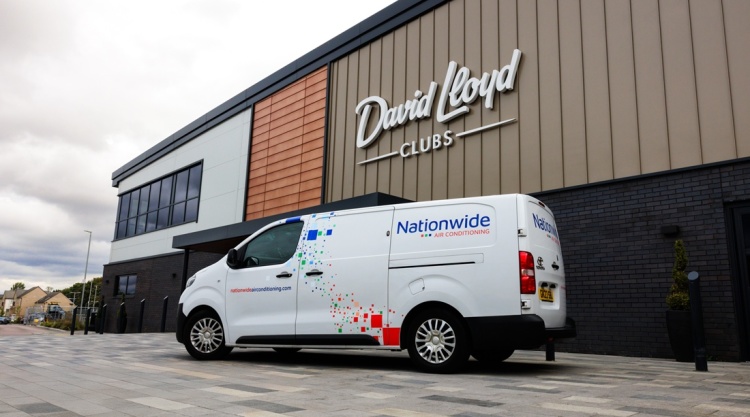
Nationwide Air Conditioning Extends David Lloyd Contract
Their 15-year partnership extended to cover Ireland, over 115 clubs and over 10,000 assets. Click Image To Read More
.png)

.gif)


.gif)