The Leading News & Information Service For The Facilities, Workplace & Built Environment Community
Continuous Flow Hot Water Heating – Still Part Of The Future
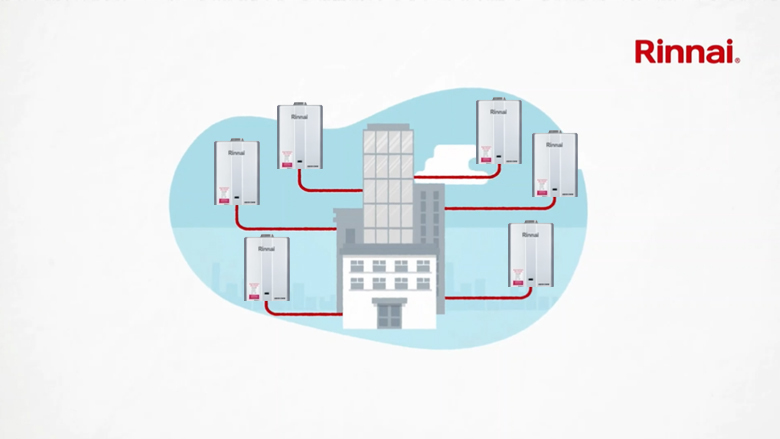
Rinnai looks at the continuing role of natural gas and alternative gases in the current energy offering.
Join the free Rinnai newsletter for updates on energy and policy.
Geopolitical strife and military conflicts in the Ukraine and the Middle East theatre continue to impact global energy costs, so what alternative gaseous fuels can fill the void that fossil fuels previously inhabited? Furthermore, despite natural gas attracting and maintaining a reputation for being easily manipulated on the global market, traditional energy sources still hold many user benefits.
UK energy provision is operating under several mitigating circumstances: the first issue confronts uncertainty regarding viable and renowned alternative energies. Although wider electrification is being introduced, there are numerous challenges to adding towards grid capacity, such as – insufficient grid connection time scales for new projects and inadequate infrastructure that suffers from a lack of investment.
A further issue when thinking of UK energy provision, is the dominance of natural gas. Media outlets fail to mention the viability of an evolution in UK power dispersal that gaseous forms of power can introduce.
The acceptance and usage of gas-based energies like renewable methane, hydrogen, LPG, or BioLPG, as opposed to large-scale electrification is a conceivable option when you consider the scale of active gas infrastructure.
When the observer aggregates all information regarding current energy infrastructure and governmental direction that favours electrification, compatibility between the two weakens.
The UK is second behind Germany in natural gas consumption, in a European context, whilst also ranking second in gas generated electrical power in 2024, with 30.3% of final electricity being produced through natural gas. Market statistics published by trusted sources and media show that in 2024 there were 1.5 million gas boilers installed across all sectors in the UK, most of which were replacements.
Natural Gas is integral to grid flexibility by fulfilling the role of a reliable baseload energy source. When alternative renewable energies such as solar or wind are low on production levels, Natural Gas can be easily accessed to provide adequate power to UK customers.
As natural gas is still highly relevant to the UK customer, continuous flow technology is the practical, economic and technical solution for hot water provision to any and every site throughout the UK. Natural gas appliances such as continuous flow water heaters are an innovation that instantly provides hot water upon command and demand.
Gas is only combusted when required which means that the customer only pays when hot water is being used, unlike a storage tanker system that must retain water temperature through constant heating therefore creating higher costs.
As a continuous flow water heater only operates when required system efficiency becomes optimised whilst costs and emissions are reduced. The size dimensions of an instantaneous water heater mean that a wall mounted installation is quicker and leaves less material waste whilst installation space is also reduced.
Natural Gas also offers a pathway towards alternative technologies such as renewable gas blends such as hydrogen-blends ready hot water heaters, gas boilers, and hybrid systems. Hydrogen-blends ready equipment and hydrogen gas mixes could play a role in future UK gas usage and assist in reducing emissions. Along with other renewable gases such as Biomethane and BioLPG.
Just last year Centrica and National Gas completed a 2% hydrogen gas blends trial at Brigg Power station in Lincolnshire, demonstrating technical and end-user feasibility. The hydrogen gas blends were used to generate electricity that provided power to local businesses and domiciles, with no reported issues.
The UK is considering plans to introduce a 2% - 5% hydrogen gas blends with further plans to extend the gas mix ratio to 20% sometime in the future. There are also interesting developments with Biomethane as another viable alternative.
Although work is underway in transitioning towards cleaner energies Natural gas still provides 85% of UK properties with essential warmth and water heating capabilities. According to figures released by the International Energy Agency (IEA) Natural gas still contributes 36.8% of final UK energy provision in 2024.
Off grid customers of fuels have a range of energies to select from, namely LPG and Bio-LPG. LPG was the lowest carbon emitting source of fuel for the 15% of UK businesses and domiciles that function off grid. Emissions from LPG are 33% less than coal and 15% lesser than oil. From 2023 and 2033 the UK LPG market is expected to grow by 12.82% and has attracted £600 million of investments between 2022 and 2025.
BioLPG can significantly reduce emissions when compared to oil and LPG. Liquid Gas UK – the trade association for the LPG and biopropane industry – has published an industry census revealing over £100 million is currently being invested in BioLPG, whilst the European market for LPG is expected to expand by 19.80% during 2026 and 2035.
Together, both BioLPG and LPG can reach and decarbonise off grid properties that other fuels and technologies find difficult to locate and effect.
Other notable synthetic gasses that are worth exploring are e-methane and biomethane. E-methane is the abbreviated name given to electro-methane, a gas which is created by extracting captured carbon dioxide and then blended with green hydrogen, itself produced via renewable energy. Green hydrogen electricity is converted into a storable low carbon gas – e-methane.
Biomethane is produced in a separate process – methane is captured from natural biological waste and forms during a natural process called “anaerobic digestion.” In the absence of oxygen microorganisms will begin to break down matter yielding a gas - methane. Once impurities are removed the methane gas becomes upgraded and biomethane is created.
Both biomethane and e-methane are capable of identical operating behaviour when compared to fossil fuels and can therefore be placed into existing infrastructure. Biomethane and e-methane can immediately fulfil the role of fossil fuels without any fracture towards appliance operating efficiency, commercial activity, or societal cohesion.
Gas fired appliances and natural gas infrastructure all still offer UK customers a solid role in the present, near and future. Innovations such as the continuous flow water heater have reduced energy costs whilst providing savings on fuel consumption and carbon output. Although unfashionable, natural gas and related technologies will continue to provide domestic and commercial applications with a cost effective and limitless supply of clean hot water.
If energy supplies become restricted there are numerous alternative gaseous energies capable of fulfilling the role of natural gas. LPG, BioLPG, e-methane and hydrogen all possess the potential of maintaining the role the natural gas occupies.
Join the free Rinnai newsletter for updates on energy and policy.
Rinnai offers clear pathways to lower carbon and decarbonisation
Plus customer cost reductions for commercial, domestic
And off-grid heating & hot water delivery and off-grid heating & hot water delivery
-
Rinnai’s range of decarbonising products - H1/H2/H3 - consists of hot water heating units in gas/BioLPG/DME, hydrogen ready units, electric instantaneous hot water heaters, electric storage cylinders and buffer vessels, a comprehensive range of heat pumps, solar, hydrogen-ready or natural gas in any configuration of hybrid formats for either residential or commercial applications. Rinnai’s H1/2/3 range of products and systems offer contractors, consultants and end users a range of efficient, robust and affordable low carbon/decarbonising appliances which create practical, economic and technically feasible solutions.
-
Rinnai is a world leading manufacturer of hot water heaters and produces over two million units a year, operating on each of the five continents. The brand has gained an established reputation for producing products that offer high performance, cost efficiency and extended working lives.
-
Rinnai products are UKCA certified, A-rated water efficiency, accessed through multiple fuel options and are available for purchase 24/7, 365 days a year. Any unit can be delivered to any UK site within 24 hours.
-
Rinnai offer carbon and cost comparison services that will calculate financial, and carbon savings made when investing in a Rinnai system. Rinnai also provide a system design service that will suggest an appropriate system for the property in question.
-
Rinnai offer comprehensive training courses and technical support in all aspects of the water heating industry including detailed CPD’s.
-
The Rinnai range covers all forms of fuels and appliances currently available - electric, gas, hydrogen, BioLPG, DME solar thermal, low GWP heat pumps and electric water heaters More information can be found on Rinnai’s website and its “Help Me Choose” webpage.
Rinnai full product availability 24/7 for next day delivery of all hot water heating unit models including 48-58kW units.
Average savings of:
20% REDUCTION of Opex cost
30% REDUCTION of initial cost
15% REDUCTION in carbon
75% REDUCTION of space
For more information on the RINNAI product range visit our website.