BCIA Welcomes Tougher Commercial Building Energy Standards
16 July 2026
The Building Controls Industry Association (BCIA) has welcomed the Government's confirmation that privately rented non-domestic buildings over 1,000 square metres in England and Wales will be expected to achieve a minimum EPC B rating by 2031, describing the move as an important step forward in improving the energy performance of the UK's commercial building stock.
Under the proposals, larger commercial buildings will be required to meet the higher standard where improvements are considered cost-effective, while existing flexibility measures, including the seven-year payback test and current exemptions, will remain in place.
The BCIA believes the announcement sends a clear signal that improving building performance is becoming an increasingly important priority for the built environment.
Although buildings larger than 1,000 square metres account for only around 7% of non-domestic buildings, they are responsible for more than half of the sector's total floor space and energy consumption. The BCIA believes the new standards therefore represent a significant opportunity to improve energy efficiency across some of the UK's largest and most energy-intensive buildings.
However, the Association has also expressed concern that smaller commercial buildings will remain subject to the existing EPC E requirement, with no confirmed timetable for further improvements.
The BCIA believes building controls and Building Energy Management Systems (BEMS) will play a critical role in helping organisations achieve higher energy performance standards.
Many commercial buildings consume more energy than necessary because heating, cooling, ventilation and lighting systems are not operating as efficiently as they could. Modern BEMS enable building owners and facilities managers to monitor, analyse and optimise building performance in real time, helping reduce energy consumption while improving occupant comfort and operational efficiency.
The BCIA's white paper, Comfort, Efficiency and Health: The Untapped Potential of Building Energy Management Systems1, found that advanced Class A BEMS deliver average energy and carbon savings of around 30%, while generating a return on investment of 143% over ten years in a typical 1,000m² office building. The same research found that advanced building controls represent one of the most cost-effective ways to improve building performance over a ten-year period.
The BCIA welcomes the Government's commitment to strengthening minimum energy efficiency standards and looks forward to working with policymakers, building owners and the wider industry to ensure building automation and controls remain central to delivering a more energy-efficient, productive and sustainable built environment.
Jen Vickers, President of The Building Controls Industry Association said: "We welcome the Government's decision to strengthen minimum energy efficiency standards for larger non-domestic buildings. These buildings account for more than half of the sector's total floor space and energy consumption, so improving their performance has the potential to deliver significant reductions in energy use, carbon emissions and operating costs.”
Vickers continued: "The decision to retain existing flexibility measures is also important. Improving building performance must remain practical and commercially viable if organisations are to invest with confidence. While this is undoubtedly a positive step forward, we would have liked to see greater ambition for smaller non-domestic buildings."
Vickers added: "Improving the performance of larger buildings will have a significant impact, but there remains considerable untapped potential across the wider commercial property sector. Thousands of smaller buildings could benefit from practical, cost-effective energy efficiency improvements, and we hope this announcement represents the first step in a broader programme of reform."
Vickers noted: "Achieving EPC B is not simply about replacing equipment or undertaking major refurbishment projects. How a building operates every day is equally important. Building controls help organisations understand, manage and optimise energy use, often delivering significant improvements before more extensive upgrades are required. They will form an important part of the solution as building owners prepare for these higher standards."
1. Comfort, Efficiency and Health: The Untapped Potential of Building Energy Management Systems white paper – see here.
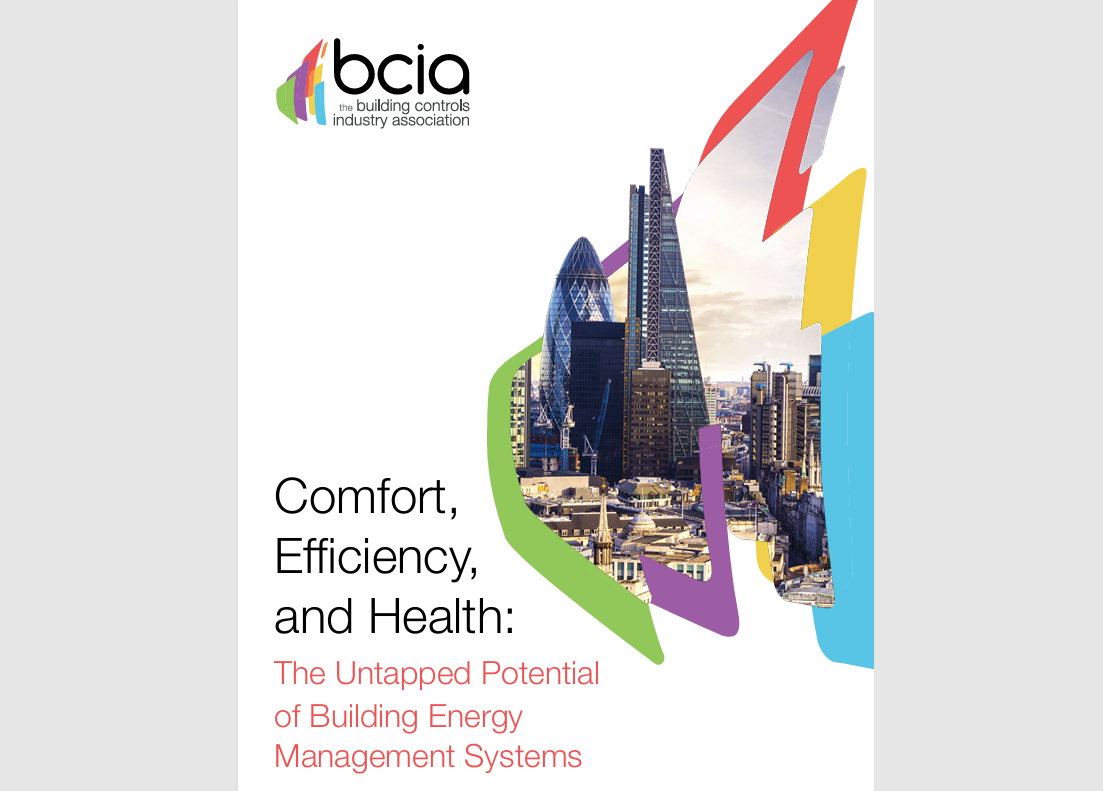
Picture: An image of the front cover of the Comfort, Efficiency and Health: The Untapped Potential of Building Energy Management Systems white paper.
Article written by Dave Mapps | Published 16 July 2026
UK Building Controls Market Remains Stable At £840m Despite Slight Q4 Dip
The UK building controls and Building Energy Management Systems (BEMS) market remained broadly stable in 2025, reaching a total value of £840.4 million despite a...
The Building Controls Industry Association (BCIA) has launched a new BEMS Delivery Framework1 designed to tackle inconsistent specification and create a clearer, more...
Commercial and public buildings risk being left behind in the UK's transition to net zero despite more than £40bn of funding, investment and policy support...
UK Building Controls Market Revenues Rise to £234.8m In Q1 2026
The UK Building Controls and Building Energy Management Systems (BEMS) market has entered 2026 with renewed momentum, according to the latest Market Information Report...
The Building Controls Industry Association (BCIA) has revealed the winners of the BCIA Awards 2026, celebrating the very best in innovation, achievement and...
The Warm Homes Plan Must Go Further: Untapped Smart Controls In Non-Domestic Buildings
Jen Vickers, President of the Building Controls Industry Association (BCIA), looks at the Warm Homes Plan and why the government must go further to create a...
The Building Controls Industry Association has named its expert judging panel for the BCIA Awards 2025.
The ceremony will highlight professionals demonstrating...
Stacey Lucas, Commercial and Marketing Director at Sontay, has been named as The Building Controls Industry Association’s new President.
Stacey has worked in the...
The Building Controls Industry Association has confirmed that its next Vice President will be Jen Vickers from Crown House Technologies.
BCIA has also announced three...
The Building Controls Industry Association’s annual awards are now open for entries from the building controls sector.
The awards mark the achievements of the...
Rinnai Director, Chris Goggin, looks at how heat pumps being classified as a main solution towards decarbonisation compares to the direction of the UK’s low carbon heating and hot water technology market. Click Image To Read More
Nationwide Air Conditioning Extends David Lloyd Contract
Their 15-year partnership extended to cover Ireland, over 115 clubs and over 10,000 assets. Click Image To Read More
Andy Burnham: A New Direction On NetZero & Possible Future Pathways?
Rinnai Director Chris Goggin evaluates the new potential path of UK emissions reductions under Prime Minister Andy Burnham. Click Image To Read More
Boat Party 2026 Highlights
9 July 2026
400 FM professionals gather on the River Thames. Learn More Here >>
2027 Date announced soon.
Risk Now A Critical Piping System Specification
James Griffiths, Head of Projects at GF Building Flow Solutions, explores how pipe theft forces industry to reconsider long-established specification decisions. Click Image To Read More
Energy Transition Update
Guest Editor, Daniel Lynn, gives examples demonstrating the direction of a collaborative and global energy transition from separate international regions. Click Image To Read More
.png)
.gif)
.gif)