.gif)
.gif)


What Drives Hygiene Purchasing Decisions In 2026
New international research from Mulberry Marketing Communications has revealed that professional hygiene buyers are demanding more from their suppliers - combining...
Read Full Article

The Leading News & Information Service For The Facilities, Workplace & Built Environment Community
Richard Brown, Head of Specification at Ideal Commercial Heating, explores the key considerations for facilities managers and building operators navigating the transition to heat pumps.
The electrification of heat is now firmly embedded in the future of the UK’s built environment. While domestic heat pumps dominate headlines, it is arguably the commercial and public-sector estate that offers the greatest opportunity for rapid, meaningful carbon reduction. Yet successful deployment relies on far more than replacing one appliance (a boiler) with another (a heat pump). It demands careful design, an understanding of buildings in their entirety, and a clear focus on how systems will operate in practice.
Why Decarbonising Heat Matters
Heating remains one of the most significant contributors to UK carbon emissions. Around a third of national emissions are attributed to heat, with approximately 20% arising from commercial buildings.
The move to reduce direct emissions from buildings is reinforced by Minimum Energy Efficiency Standards (MEES), Energy Performance Certificate (EPC) requirements, and planning policy, alongside growing scrutiny around Environmental, Social and Governance (ESG) performance.
Within this context, heat pumps have moved from being an emerging technology to a central pillar of many organisations’ long-term heating strategies.
Why Heat Pumps Are Central to Decarbonisation Strategies
The appeal of heat pumps lies in both carbon performance and efficiency. As the UK electricity grid continues to decarbonise, electrically driven heating systems offer significantly lower operational emissions than fossil fuel alternatives. Heat pumps can also deliver multiple units of heat for every unit of electricity consumed, helping to reduce energy use when systems are designed and operated effectively.
However, they are not a simple like-for-like replacement for traditional boilers. The most successful projects are those where heat pumps are considered as part of a wider building strategy, rather than as a single equipment substitution.
Start With the Building, Not the Plant Room
One of the most important principles in system design is that heat pump performance is heavily influenced by building performance. Before plant selection is considered, attention should be given to how heat demand can be reduced at source. Improvements to insulation and air tightness can reduce heating demand significantly, which in turn supports better system performance and lower running costs.
This approach is increasingly recognised as fundamental to delivering effective low carbon systems rather than simply compliant ones.
Understanding Operational Needs
Commercial heat pump projects succeed when technical solutions are aligned with how the building is used day to day.
Budget constraints, expectations around comfort, requirements for reliability and plans for future building use all influence the most appropriate system approach. The way in which the system will be operated and maintained is equally important for facilities managers responsible for performance over time.
These considerations, along with a range of established guidance such as Building Regulations Part L, EPC requirements and wider energy frameworks, often lead to more flexible solutions than a straightforward move to fully electric heating. In many cases, hybrid systems that combine heat pumps with boilers provide a practical balance between reducing carbon emissions and maintaining reliability.
Key System Considerations
Once objectives are established and building performance is understood, attention turns to system design. Ensuring the system is correctly sized for the building is essential, as oversizing can reduce efficiency and increase running costs.
Heat pumps typically operate more efficiently at lower temperatures, which may require adjustments to existing systems in refurbishment projects. Hot water demand must also be considered carefully, particularly in buildings with higher usage.
Existing building services infrastructure can influence what is achievable, and systems may need to be adapted to work effectively together.
Thermal storage can also play a valuable role in improving performance, helping systems operate more consistently and efficiently over time.
Practical Realities: Space, Noise and Maintenance
Successful projects must also address the practical constraints of real sites. Space for external units, access for maintenance and the potential impact of noise are all important considerations, particularly in occupied or mixed-use buildings.
The UK climate also places demands on system design, with proper drainage, frost protection and pipework insulation all contributing to reliable operation.
Towards Better Outcomes
Commercial heat pumps are now a core component of low-carbon building strategies. However, their success depends on how well they are integrated into the building and how effectively they are managed over time.
By prioritising building performance, aligning systems with operational needs and considering practical site constraints, facilities managers can help ensure systems deliver both carbon savings and reliable performance.
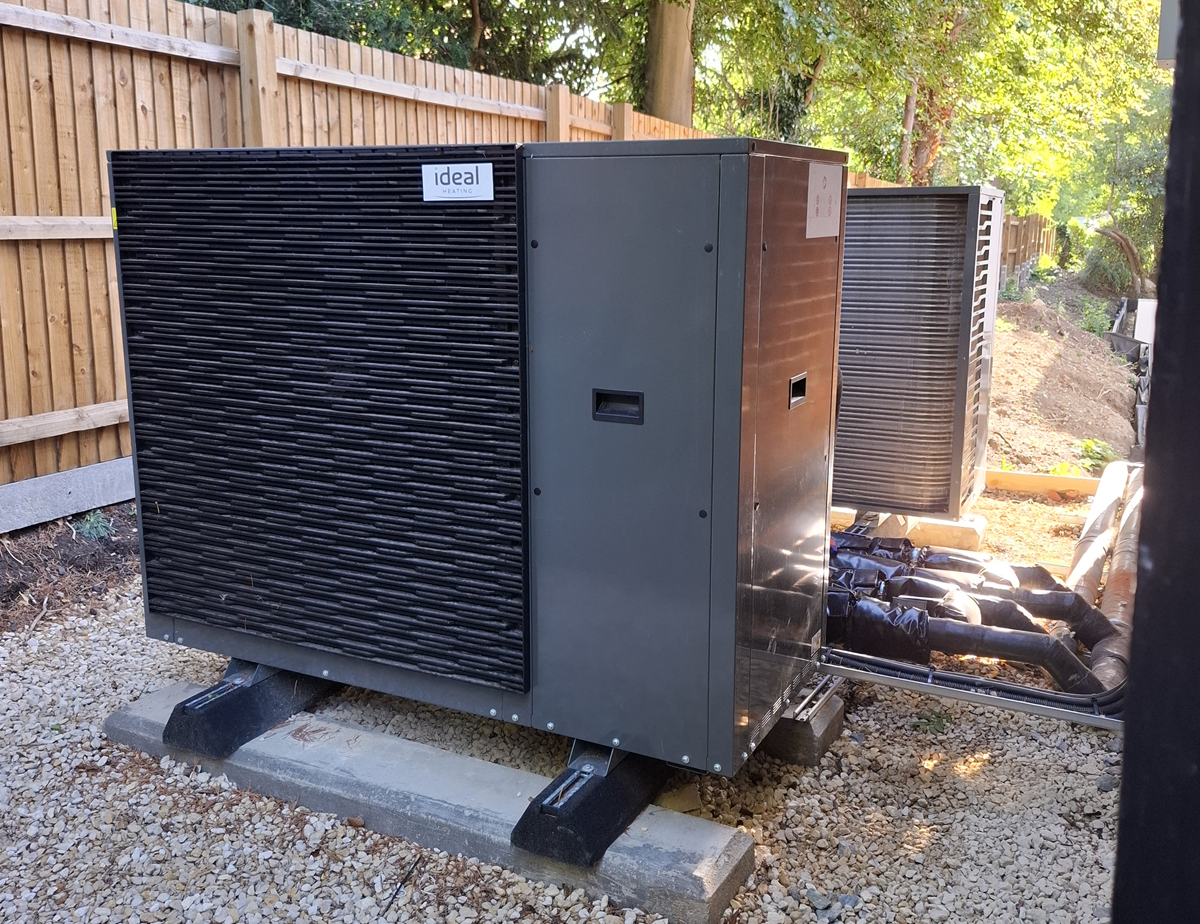
Picture: An image of an air-source heat pump from Ideal Commerical Heating.
Article written by Richard Brown | Published 01 May 2026
New international research from Mulberry Marketing Communications has revealed that professional hygiene buyers are demanding more from their suppliers - combining...
Read Full ArticleIn the second of this three-part mini-series ThisWeekinFM speaks to Chris Goggin, Director of Operations at Rinnai UK, the world’s largest manufacturer of gas...
Read Full ArticleGreen Space Innovations, in partnership with Reencle, has announced the launch of the UK’s first office food digester that transforms waste from a disposal problem...
Read Full ArticleIn the first of this three-part mini-series ThisWeekinFM speaks to Chris Goggin, Director of Operations at Rinnai UK, the world’s largest manufacturer of gas...
Read Full ArticleNHS Property Services has reduced carbon emissions by 5.2% in 2025/26, exceeding its annual target and continuing to drive large‑scale energy efficiency and...
Read Full ArticleSustainability reporting across major infrastructure has become increasingly sophisticated. Airports and transport hubs now measure greenhouse gas (GHG) emissions across...
Read Full ArticleRinnai at InstallerSHOW 2026 is featuring a wide range of new products and initiatives in heat pumps, hot water heating units and electric storage heaters, and...
Read Full ArticleDaikin Rental Solutions has announced a major expansion of its UK rental fleet, combining new high-capacity cooling systems, low-carbon heating solutions, process cooling...
Read Full ArticleArtus Air heating and cooling solutions are being installed at British Land’s new London head office at 20 Triton Street,...
Read Full ArticleWork has started on Aston University’s Carbon Neutral Energy Centre which aims to transform how power is generated and used across the University. It is the...
Read Full Article