Dale Jones, Technical Director at SafeContractor, shares how documentation does not equal competence when considering supply chain contractor compliance.
For those responsible for hiring contractors within the facilities management profession, contractor assurance often begins with documentation: policies, insurance certificates, risk assessments, method statements and training records. These checks are essential because they provide a baseline for whether a contractor has the systems and credentials expected. However, in a building safety context, paperwork alone cannot prove that an individual understands the design intent, specification, regulatory requirements or practical standards needed to deliver compliant building work.
To meet the expectations created by the Building Safety Act 2022 and the strengthened dutyholder regime, organisations need to look beyond whether the right paperwork exists and ask whether the people involved in building work can demonstrate the competence needed to deliver work that is safe, compliant and aligned with the relevant design, specification and Building Regulations.
Paperwork vs Competence
Policies, insurance certificates and training records are important indicators of contractor assurance, but they do not tell the full picture, particularly when the question is whether an individual has the skills, knowledge, experience and behaviours needed to carry out building work in line with the relevant design, specification and regulatory requirements.
For example, risk assessments and method statements (RAMS) are central to contractor management because they explain the health and safety hazards associated with a task, the controls that must be followed and how the work should be carried out safely. However, a RAMS document should not be mistaken for evidence that the work will meet the required design intent, specification or Building Regulations. It may tell a contractor how to install or construct something safely, but if they have not also been given the correct drawings, product specifications, manufacturer instructions, sequencing requirements and any relevant building control or dutyholder information, they may still complete the task incorrectly or in a way that compromises compliance.
In this context, competence is not just about following a safe system of work. It is also about understanding what has to be built, installed or maintained, the standard it must meet, and when to stop and ask for clarification if the information provided is incomplete, unclear or inconsistent.
The importance of demonstrable competence has been reinforced by the Building Safety Act 2022, which places greater emphasis on the roles and responsibilities of those involved in the design, construction and management of buildings. For organisations appointing contractors, this means assurance cannot stop at organisational policies or generic pre-qualification checks; it must also consider whether the individual or organisation is competent to carry out the specific building work required.
Building safety failures can happen when information is incomplete, misunderstood or not properly translated into the work being carried out. That is why competence management, supervision and clear escalation routes matter. For facilities managers, this is particularly important because contractors may be working across multiple locations, responding to urgent maintenance issues or carrying out remedial works where the design intent, specification and regulatory requirements still need to be understood and followed.
Demonstrable Competence
The Building Safety Act 2022, together with the strengthened dutyholder and competence requirements introduced through the building safety reforms, has reinforced the expectation that those involved in building work have the necessary skills, knowledge, experience and behaviours (SKEB) to carry out their roles safely, competently and in compliance with the Building Regulations.
A core part of evidencing SKEB is recognised industry qualifications such as NVQs, relevant training, practical experience and ongoing professional development. Safety Schemes in Procurement (SSIP) certification is well known and widely used as a health and safety pre-qualification route, helping organisations check that contractors have appropriate health and safety arrangements in place. However, for building work, this should sit alongside a separate and more specific competence check: whether the contractor, designer or individual has the skills, knowledge, experience and behaviours needed to carry out their role in a way that supports compliance with the relevant Building Regulations, design intent and specification. In practice, contractor assurance therefore needs to look beyond health and safety pre-qualification alone and include evidence of competence for the specific building work being delivered.
Within SKEB, behaviour is often the element businesses find hardest to define and evidence. While skills, knowledge and experience can usually be demonstrated through qualifications, training records and previous work, behaviour is more difficult to capture consistently and is still a relatively new area for many organisations to work through. However, it is an important indicator of whether competence is being applied in practice. In a building safety context, this can be seen in whether individuals challenge unclear information, follow the correct specification, escalate concerns and avoid making assumptions when the work does not match the design intent or regulatory requirements.
For example, when responding to an urgent fault or carrying out remedial works, a contractor may be under pressure to keep the job moving. In these situations, the behavioural element of competence becomes particularly important. A competent individual should be able to recognise when part of the design, specification or build does not look right, when site conditions do not match the information provided, or when an instruction appears incomplete or inconsistent. Rather than pressing ahead or making assumptions, they should pause, raise the concern and seek clarification from the appropriate person before continuing. For businesses, evidence that this is happening might come through supervisor feedback, inspection notes, quality checks, records of escalation or examples where work was paused until the right information was confirmed. A willingness to challenge, communicate and escalate concerns is therefore a key indicator that competence is being applied in practice, not just recorded on paper.
This type of evidence helps businesses move beyond simply confirming that a safe system of work exists. It shows whether the person understands what must be delivered, recognises when building safety, specification or compliance requirements may be at risk, and takes appropriate action before work continues.
Paperwork to Performance
Policies, certificates and certifications are an essential part of contractor assurance. However, on their own they cannot demonstrate that an individual is competent to deliver building work in line with the relevant design, specification and regulatory requirements.
For facilities managers responsible for contractor management, evidence of behaviour can be the determining factor in whether an individual understands their role, the information they have been given and the standard the work must meet. It also helps show whether they can apply the correct controls, follow the specification and escalate concerns before building safety or compliance is compromised.
To respond to the Building Safety Act 2022 and the wider focus on individual competence, organisations need to demonstrate that contractors have the appropriate SKEB for their roles and that those capabilities are consistently applied to the building work being delivered. That means moving beyond evidence that a contractor has general health and safety arrangements in place, and towards evidence that they can deliver work that is safe, compliant and aligned with the required design and specification.
Picture: A picture of Dale Jones, Technical Director at SafeContractor.
Article written by Dave Mapps | Published 21 August 2026
Actuate Asks for UKCA Mark Transition for Construction Products Extension
Engineering services sector body Actuate UK has issued a warning about serious consequences for businesses, public and commercial projects as well as domestic customers...
NG Bailey and Dalkia Engineering Limited have become the latest companies to sign the Building Engineering Services Association (BESA) Member Pledge, reinforcing their...
The mechanical & electrical (M&E) contracting market has shown impressive resilience in the face of challenging economic conditions, according to a new Top 30 UK...
Hotels And Hospitality Venues Present Unique Maintenance Challenges
SFG20 reveals the maintenance challenges facing the hospitality sector and how FM teams can improve compliance and efficiency.
From budget hotel chains to luxury...
Half Of FM Teams Are Not Confident In Achieving Compliance
Data from the latest SFG20 survey reveals the FM industry's biggest challenges, from compliance and budget constraints to technology and AI adoption.
According to...
The Building Engineering Services Association has suspended 14 member companies for failing to comply with audits.
The 14 companies failed to meet the Building...
Corporate Spending with Social Enterprises Increases 46% in 9th Year of Buy Social Challenge
33 businesses, including Amey, CBRE, Compass Group, Equans, Mitie, Sodexo and Willmott Dixon, collectively spent £179 million with social enterprise suppliers in...
Last Chance to Enter CBRE Supplier Partner Innovation Challenge 2025
Contractors and suppliers working in FM and the built environment have until 31 January to submit their business for the CBRE UK Supplier Partner Innovation Challenge...
Five Social Sustainability Questions Every Business Must Ask Their Supply Chains
Ensuring a commitment to health and safety is a well-established practice. But companies are increasingly being held accountable for their suppliers' sustainability...
Sodexo has stated that it will only work with suppliers who demonstrate tangible net-zero progress “through published reporting” in the future.
As part of...
Beyond SCOP - Estimating Real World Heat Pump Performance With SPF
Rinnai Applied Head of Design Sean Ehlen evaluates the importance of heat pump system congruity utilising Seasonal Performance Factors (SPF) as the expected performance. Click Image To Read More
Energy Transition Update
ThisWeekinFM Guest Editor, Daniel Lynn, has picked a number of examples that demonstrate an international energy transition across separate regions of the globe. Click Image To Read More
Boat Party 2026 Highlights
9 July 2026
400 FM professionals gather on the River Thames. Learn More Here >>
2027 Date announced soon.
Are Heat Pumps Really The Future?
Rinnai Director, Chris Goggin, looks at how heat pumps being classified as a main solution towards decarbonisation compares to the direction of the UK’s low carbon heating and hot water technology market. Click Image To Read More
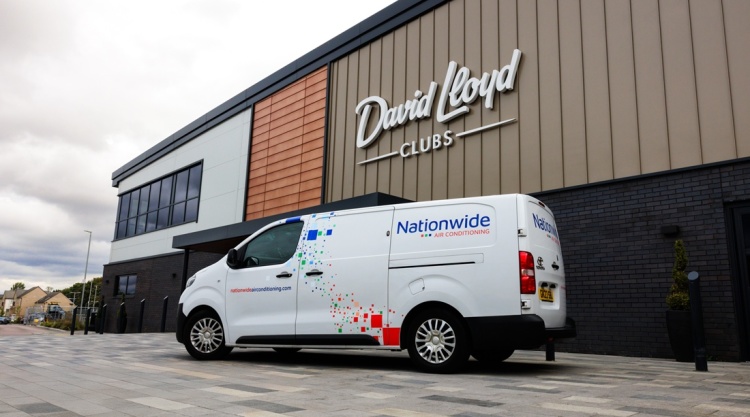
Nationwide Air Conditioning Extends David Lloyd Contract
Their 15-year partnership extended to cover Ireland, over 115 clubs and over 10,000 assets. Click Image To Read More
.png)


.gif)

.gif)