.gif)
.gif)


BESA Backs Regulator’s Warning To Main Contractors
The Building Engineering Services Association (BESA) says it strongly supports a stark warning from the Building Safety Regulator that main contractors must...
Read Full Article.png)

The Leading News & Information Service For The Facilities, Workplace & Built Environment Community
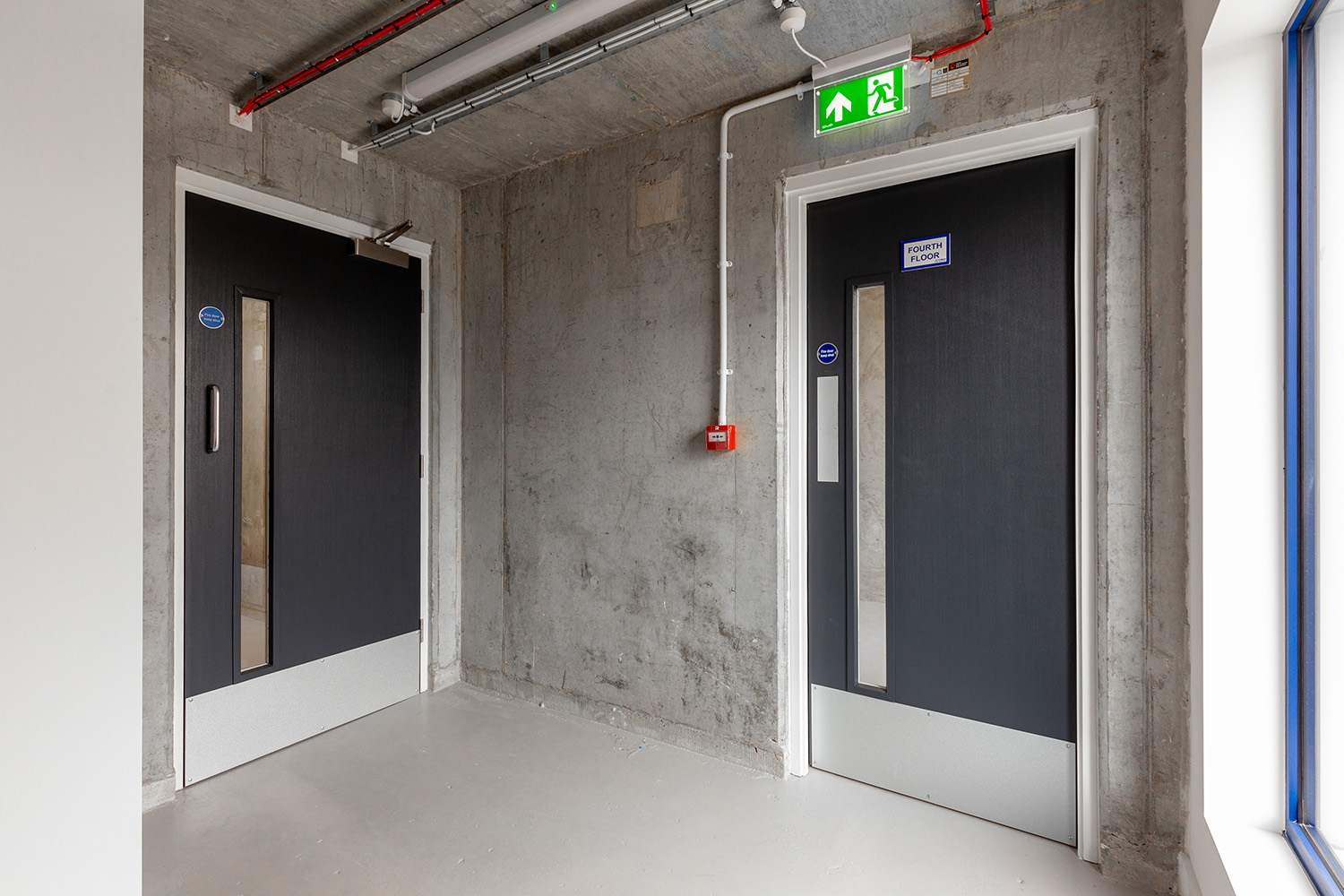
FDIS Ltd, the owner of the Fire Door Inspection Scheme (FDIS), has become the first organisation in the UK to be awarded UKAS accreditation for the certification of fire door inspectors under the international standard BS EN ISO/IEC 17024:2012 Conformity assessment – General requirements for bodies operating certification of persons.
The accreditation marks a shift in the industry by focusing on individual competence. It provides those responsible for appointing or procuring fire door inspectors with assurance that the inspector has met the scope and rules to demonstrate competence set out in the FDIS Competence Person Certification Scheme standard.
Championing personal competence
The FDIS is the first to have its ‘Competent Person Certification Scheme’ independently verified by UKAS against ISO/IEC 17024:2012 to ensure that the specific skills, knowledge and experience of the individual inspector meet a rigorous global benchmark with periodic reassessment to maintain certification. This is different to other schemes in the UK that have accreditations, such as ISO/IEC 17065, which are based on certification of products, processes or services.
The accreditation comes at a time of increased regulatory scrutiny following the introduction of the Building Safety Act 2022 (BSA) and the Building Safety Regulator (BSR), which place greater emphasis on demonstrable competence across the built environment. Under the BSR framework, individuals must demonstrate the specific skills, knowledge, experience and behaviours (SKEB) required for their role, while organisations must evidence organisational capability through appropriate management systems, resources and supervision.
All FDIS-approved inspectors are assessed using a range of assessment methods, including the FDIS Certificated Inspector Workbook and online activities, a portfolio of evidence and a practical on-site assessment in a live environment, followed by a written examination. This process provides clarity and confidence to the end user that the individual inspector’s knowledge, skills and experience has been tested thoroughly. In addition to the initial process, every inspector operating under FDIS has to meet annual checks, including demonstrating regular continued professional development (CPD), as well as being reassessed every three years.
2025 Inspection data
The importance of this accreditation is reinforced by the latest FDIS inspection statistics. Data from inspections carried out in 2025 shows that 72% of fire doors did not meet the required standard to pass inspection.
Key findings from the 2025 data include:
Of the fire doors that did not meet the required standards, hospitals, local authority and housing association buildings, and hotels and residential healthcare homes were found to require the most remediation work. These settings - particularly healthcare environments - are used by more vulnerable occupants and experience high levels of footfall, increasing wear and tear. This means that fire doors in these environments require more frequent inspection and maintenance to ensure they remain fit for purpose.
This underlines the importance of engaging a certified fire door inspector to carry out regular inspections, ensuring that defects are identified and addressed promptly so that doors continue to meet the required standard.
The Golden Thread and the rise of the ‘Responsible Person’
Since the introduction of the ‘Golden Thread’ of information in building safety, FDIS-approved inspectors have noted a change in the sector with nearly a third (30%) reporting an increase in Responsible Persons carrying out the appropriate due diligence when hiring a Fire Door Inspector, while 59% reported an overall increase in demand for professional inspections. Additionally, 15% noted an improvement in the documentation available.
Louise Halton, FDIS Scheme Manager, said, “The Building Safety Act and The Regulatory Reform (Fire Safety) Order 2005 are clear that individuals must be able to demonstrate the skills, knowledge, experience and behaviours required for their role. Fire doors are a critical life-saving component of a building, so the competence of the professionals responsible for inspecting them should not be assumed – it should be evidenced through recognised training, assessment and third-party accreditation.”
Halton added: “In essence, ISO/IEC 17024 ensures a person is qualified to perform a job, while ISO/IEC 17065 ensures a product, process, or service meets specific standards. Both standards aim to build confidence and trust through impartial, competent, and consistent third-party assessment.”
Halton continued: “It’s encouraging to see a growing awareness and focus on competence and documentation across the sector. However, to ensure fire doors continue to meet the required standard once installed, it’s vital that competent fire door inspectors, such as those approved by the FDIS, carry out fire door inspections.”
Halton concluded: “For building owners, managers and Responsible Persons this means recognising the level of competency required, proactively verifying inspector competence, keeping accurate maintenance records and quickly addressing maintenance needs.”
Picture:
Article written by Dave Mapps | Published 17 March 2026
The Building Engineering Services Association (BESA) says it strongly supports a stark warning from the Building Safety Regulator that main contractors must...
Read Full ArticleThe 6 April 2024 deadline is approaching, marking the end of the transitional period for building control applications and a new regime which has implications for those...
Read Full ArticleDaniel Foryszewski from MRI Software explores how residential building operators can leverage data and technology to comply with safety standards and adopt new...
Read Full ArticleThisWeekinFM’s first Spotlight Interview for 2024 is with Paul Bullard, SFG20’s Product and Professional Services Director. A subject matter expert on...
Read Full ArticleActuate UK, who represents professional bodies such as BESA and CIBSE, says that new requirements through the Building Safety Act will need to be enforced...
Read Full ArticleContractors and insurers must work together to ensure the rising cost of professional indemnity insurance does not undermine efforts to improve building safety, according...
Read Full ArticleWith the draft Building Safety Bill published last week, many in the facilities management and built environment sector are welcoming the proposed changes. The...
Read Full ArticleThe Building Engineering Services Association (BESA) is launching a new qualification for project managers who need to keep pace with fast moving regulatory and...
Read Full ArticleKiwa has launched a new third-party certification scheme for organisations delivering the service, maintenance, and repair of smoke control systems, providing independent...
Read Full ArticleNine years on from the Grenfell Tower tragedy, the Door & Hardware Federation (DHF) has reflected on the changes that have taken place across the construction and...
Read Full Article