From Drought To Downpours – Rethinking The UK’s Water Resilience
18 September 2026 | Updated 17 September 2026
Steve Harding, Founder and CEO of Showerkap, warns that as the UK moves from dry periods to heavier rainfall, the challenge is no longer just whether we have enough water - it is whether we are intelligently managing the water we have.
The British relationship with rain has always been complicated. We complain when it arrives, worry when it doesn't and rarely think about what happens to the water once the rain has gone.
As the UK moves from prolonged dry periods towards potentially much heavier rainfall, the question is no longer simply whether we have enough water, it is whether we are intelligently managing the water that we have.
A recent article from the Chartered Institution of Water and Environmental Management1 (CIWEM), an independent charity with members and organisations in over 89 countries, warns that after prolonged dry weather, intense rainfall can generate rapid runoff, overwhelm drainage systems, contribute to pollution and trigger surface-water flooding.
It argues that drought and flooding should not be treated as separate issues as they are increasingly two manifestations of the same challenge - a more volatile climate and a water system that needs to be capable of adapting.
We Cannot Afford To Waste Water
After a drought, rainfall is welcome, but it does not automatically translate into resilient water supplies.
Following prolonged dry conditions, soils can become less able to absorb intense rainfall, meaning large volumes can run rapidly into drains, rivers and watercourses rather than being captured and stored for later use. CIWEM, which aims to improve water and environmental management for communities, has highlighted the importance of approaches that slow, store and manage rainfall closer to where it falls.
It argues that we need to change our approach and to think of rain as a valued resource, rather than something that goes straight down the drain.
Rainwater harvesting, sustainable drainage, wetlands, reservoirs, aquifer recharge, water reuse and natural flood management all have a role to play. So does changing behaviour and using less water in homes and at work.
Water We Save Today Is Water We Don't Have To Find Tomorrow
The UK's water challenge is not going away simply because the weather changes.
The Environment Agency's National Framework for Water Resources 2025 estimates that, without further action, England could face a public water supply deficit of up to 5 billion litres a day by 2055. The modelling also identifies additional demand from sectors including energy, food and data centres.
Running concurrently is a spiralling infrastructure challenge with, according to the BBC2, nearly three billion litres lost daily in the UK through leaks.
But it is also a demand challenge. The Financial Times reports that in the UK, we currently use more water than we can replenish.
The government's water resources framework explicitly calls for a combined approach - developing new sources of supply, while reducing demand through leakage reduction and more efficient water use.
New reservoirs and other strategic infrastructure will be essential, but they take years to plan, approve and build. Demand reduction can begin immediately.
Every litre that is not wasted is a litre that does not need to be abstracted, treated, pumped and heated.
Stop Treating Water Efficiency As A Drought Response
One of the problems with the UK's approach to water conservation is that it currently feels seasonal.
When reservoir levels fall, we talk about shorter showers, fixing leaks and the need to use water more carefully.
When the rain returns, conversations about water conservation often stop.
Water efficiency should become part of the permanent infrastructure of our homes, hotels, offices, hospitals, student accommodation and other high-consumption buildings.
CIWEM's own drought position highlights the importance of clearer communication with customers about saving water and notes that, as smart metering becomes more widespread, making better use of the resulting data will be important for building greater awareness of drought.
The next step is to go beyond simply telling people to save water.
What is needed is technology that can show where water is being used, identify where consumption is excessive and help people change their behaviour.
Showers Biggest Water Drain At Home
Showering is one of the most routine activities and in hotels and other high-occupancy buildings thousands can take place every day.
According to We Are Water Foundation4 showers account for around 30% of household water use in developed countries – the biggest drain at home.
The opportunity is not simply to persuade every individual to care more about water use. It is to design systems that make saving water easy, visible and manageable.
Smart monitoring, behavioural nudges and technologies that reduce consumption without compromising the user experience can all contribute to this. And there is another benefit. Reducing hot-water consumption does not just save water. It also reduces the energy required to heat, pump and deliver that water - connecting water efficiency directly to energy use and carbon reduction.
That makes water efficiency much more than a sustainability initiative. It also becomes an operational efficiency strategy.
From Water Abundance To Water Intelligence
What the UK needs now is a cultural shift.
The UK has historically thought of itself as a wet country. But rainfall is not distributed evenly across the country or throughout the year and climate change is altering previous temperate weather patterns.
The Environment Agency5 says climate change is likely to contribute to warmer, wetter winters and hotter, drier summers, leading to more floods, droughts and heatwaves.
The Met Office6 similarly projects that UK summers will become drier on average, while rainfall events that do occur in summer are likely to become more intense.
That creates a fundamental paradox where we can experience water scarcity and flooding within the same system. The answer cannot just lie in additional infrastructure.
What is needed are systems, technology and behaviours that help capture water when there is too much, conserve it when there is too little and use it efficiently throughout the cycle.
Resilience Means Preparing For Both Extremes
The lesson from the current likely cycle of drought, followed by downpours is simple. We cannot build resilience around yesterday's climate.
The UK needs a water system designed for greater variability - one that can cope with prolonged dry periods, but also makes better use of intense rainfall when it arrives.
That means investing in supply, but also in demand reduction. It means managing rainfall closer to where it falls, better data and smarter monitoring, water reuse and more circular approaches.
Crucially, it means changing everyday behaviours, not just when the taps are under threat, but all year.
The rain is already forecast. The question is whether we will simply watch it run away, or we can build a system capable of capturing its value.
After drought, the downpour should not be a reset. It should be an opportunity to build a more intelligent, resilient and water-secure UK.
1. Chartered Institution of Water and Environmental Management – see here.
2. BBC report on 3 billion litre water loss through leaks – see here.
3. FT report on water replenishment – see here.
4. We Are Water Foundation report on shower consumption – see here.
5. The Environment Agency climate change report – see here.
6. The Met Office climate change report – see here.
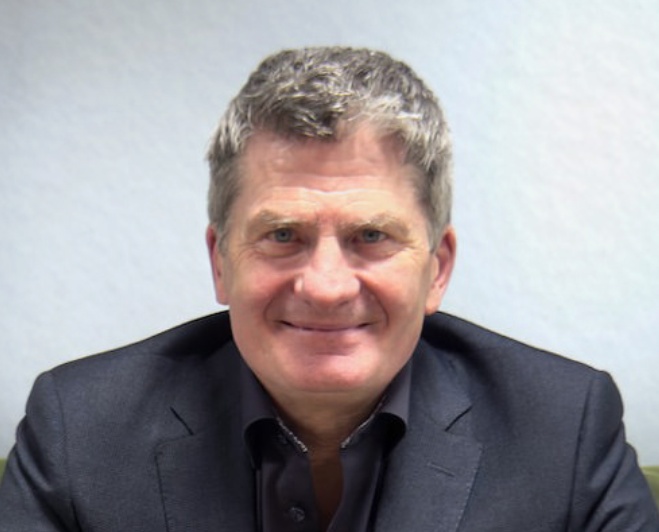
Picture: A headshot of Steve Harding, Founder and CEO of Showerkap.
Article written by Stephen Harding | Published 18 September 2026
As Cooling Becomes Critical Infrastructure, Is It Time To Rethink How We Deliver It?
As the UK experiences increasingly frequent periods of extreme heat, Graeme Hamilton, Managing Director of Energy at OCS, argues that cooling is rapidly becoming critical...
Water Waste Is A Design Failure - What The Built Environment Gets Wrong About Human Behaviour
Steve Harding, Founder and CEO of Showerkap, warns water is one of our most precious resources, yet the UK does not realise that we’re at risk of running out....
New Met Office Data to Help FMs Respond to Climate Change
A new climate data portal from the Met Office will allow facilities managers to investigate physical climate risks over the next 50 to 100 years.
As part of the...
The Met Office has confirmed that 2022 was the UK’s hottest year on record, with an average temperature of over 10°C recorded for the first time.
The full UK...
As people are urged to restrict their water use to protect supplies during the current heatwave, what would it practically mean for businesses if a drought is...
Avison Young Appointed Property Manager For Typhoo Wharf
Global commercial real estate advisor Avison Young has been appointed by the Gooch Estate as property manager for the estate and public realm at Typhoo Wharf in Digbeth,...
Sandman Signature London Gatwick Hotel Adopts New Showerkap Greentech
Sandman Hotel Group UK & Ireland is boosting its sustainability commitment, with the introduction of the first smart water management technology featuring behavioural...
‘Overheating is the Most Overlooked Building Safety Issue,’ Says BESA
As deaths due to excess heat increase, the Building Engineering Services Association is calling for more concerted efforts to adapt the built environment’s...
£892,500 Fine Handed to East Midlands Airport for Breaching Environmental Permits
The Environment Agency has prosecuted East Midlands Airport after drainage water pollution from runway discharge was discovered, resulting in a fine of...
Rinnai Director, Chris Goggin, looks at how heat pumps being classified as a main solution towards decarbonisation compares to the direction of the UK’s low carbon heating and hot water technology market. Click Image To Read More
Nationwide Air Conditioning Extends David Lloyd Contract
Their 15-year partnership extended to cover Ireland, over 115 clubs and over 10,000 assets. Click Image To Read More
Andy Burnham: A New Direction On NetZero & Possible Future Pathways?
Rinnai Director Chris Goggin evaluates the new potential path of UK emissions reductions under Prime Minister Andy Burnham. Click Image To Read More
Boat Party 2026 Highlights
9 July 2026
400 FM professionals gather on the River Thames. Learn More Here >>
2027 Date announced soon.
Risk Now A Critical Piping System Specification
James Griffiths, Head of Projects at GF Building Flow Solutions, explores how pipe theft forces industry to reconsider long-established specification decisions. Click Image To Read More
Energy Transition Update
Guest Editor, Daniel Lynn, gives examples demonstrating the direction of a collaborative and global energy transition from separate international regions. Click Image To Read More
.png)
.gif)

.gif)