




Labour Party Launches National Mission on Clean Energy
Labour leader Sir Keir Starmer has vowed to end North Sea oil and gas exploration and to set up a publicly owned green energy company. If successful in the next...
Read Full Article

The Leading News & Information Service For The Facilities, Workplace & Built Environment Community
Gas hazards can arise in a wide range of facilities, from leisure centres to manufacturing sites to healthcare buildings and educational campuses, making them a key concern for many FM teams.
Megan Hine, Gas Safety Expert at Draeger Safety UK, explores five key aspects of gas safety to help FMs introduce an effective management programme.
1. Challenge Assumptions About Gas Safety
FMs may approach the topic of gas safety reliant, in part, on their existing knowledge of the topic. However, many commonly held beliefs about hazardous gases are incomplete, or simply incorrect.
For example, Hydrogen sulphide (H₂S) is widely associated with a distinctive ‘rotten egg’ smell, leading some people to assume that any leak would be immediately obvious. However, persistent exposure to higher concentrations of H₂S can impair the sense of smell over time, meaning dangerous gas leaks may go undetected.
Specialist gas detection equipment and training to understand the properties and risks of the gases present in a facility should form the starting point for an effective gas safety strategy.
2. Don’t Rely On Workarounds
When gas risks aren’t fully understood, employees may develop their own ways of managing them. Opening doors and propping open windows may seem like a practical solution, but this doesn’t provide reliable detection or control.
A suitably designed fixed gas detection system can continuously monitor an area, alert personnel when concentrations reach predetermined levels and, where appropriate, trigger ventilation, shut down equipment or initiate other programmed safety measures.
Gas monitoring can also deliver operational benefits. Rather than running ventilation continuously, facilities can activate it only when gas is detected, improving efficiency and reducing energy consumption.
Additionally, reliable gas detection also helps organisations demonstrate due diligence and support compliance with relevant health and safety responsibilities.
3. Match Detection To The Risk
Choosing the right gas detection technology is just as important as having gas detection in the first place. Portable personal monitors and fixed gas detection systems serve different purposes and should not be viewed as interchangeable.
Portable monitors are designed to be worn by individual workers, providing personal protection as they move throughout a site. Their effectiveness depends not only on factors such as sensor selection and correct operation, but also on the wearer being in the appropriate location. Fixed detectors, by contrast, provide continuous monitoring of defined locations and can be integrated with ventilation systems, alarms and building management systems to support a broader site-wide safety strategy.
In many facilities, effective protection requires both approaches, with fixed systems providing continuous area monitoring and portable devices protecting employees and contractors undertaking specific tasks.
4. Consider Less Obvious Spaces
The highest-risk areas are not always the most visible. Plant rooms, boiler rooms and gas storage areas may come to mind, but risks can also exist in cupboards, cabinets, enclosed spaces and poorly ventilated areas.
A comprehensive risk assessment should therefore consider the whole building. Building plans, maintenance records and information from occupants and contractors can help identify where gases are stored, used, or potentially generated.
This becomes particularly important in multi-tenant buildings and flexible workplaces. Different organisations may introduce different gases and processes, meaning that FMs need visibility of risks across the building rather than just individual workspaces.
5. Plan For Change
Gas safety isn’t something that can be addressed once and forgotten. Buildings evolve, tenants change, processes and operational requirements shift, and new technologies are introduced – all of which can create new hazards or alter existing risks. Gas detection strategies should therefore prioritise flexibility and scalability.
Undertaking a gas mapping study in line with the standard can provide a robust, defensible basis for detector selection and placement, helping to meet the expectations of insurers and health and safety stakeholders. It can also provide a valuable reference point when building modifications, process changes or plant upgrades take place, helping ensure detection coverage continues to align with recognised industry guidance.
Putting The Recommendations Into Action
When it comes to gas safety, the FM goal is a strategy that provides continuous visibility, supports informed decision-making and can evolve with the facility and business. Taking this whole-building, lifecycle approach makes gas detection an integral part of effective facility management.
For FMs, the priorities are clear. Keep gas safety simple, choose detection and monitoring solutions that integrate with wider building systems, and work with a provider that can support the solution throughout its lifecycle. It is also important to look beyond the initial purchase price and consider the total cost of ownership, including maintenance, calibration and sensor replacement.
Above all, FMs should challenge complacency and avoid workarounds that can leave people exposed.
As buildings, occupants and operations change, gas safety needs to remain an active part of the wider facilities management strategy.
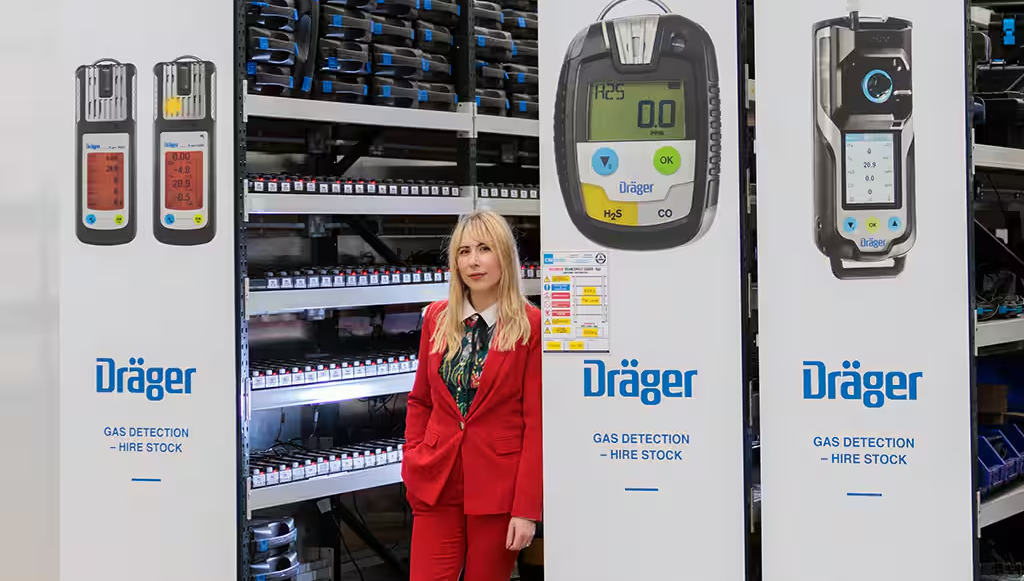
Picture: An image of Megan Hine standing by Draeger Gas Safety Products.
Article written by Megan Hine | Published 03 November 2026
Labour leader Sir Keir Starmer has vowed to end North Sea oil and gas exploration and to set up a publicly owned green energy company. If successful in the next...
Read Full ArticleAs gas production from Russia’s Gazprom slows, cities in Germany are switching to cold water in pools, turning off the spotlights at public monuments and banning...
Read Full ArticleAndy Cooper, UK Sales Manager at Clarke Energy, joins us to discuss CHP technology and other energy solutions. Clarke Energy, a KOHLER Company, is a...
Read Full Article