

.gif)
.gif)
Flexible Workspace Provider Expands Into Germany
infinitSpace will partner with German commercial real estate developer CG Elementum on two new projects. Both buildings are owned by the Gröner Group and are...
Read Full Article

The Leading News & Information Service For The Facilities, Workplace & Built Environment Community
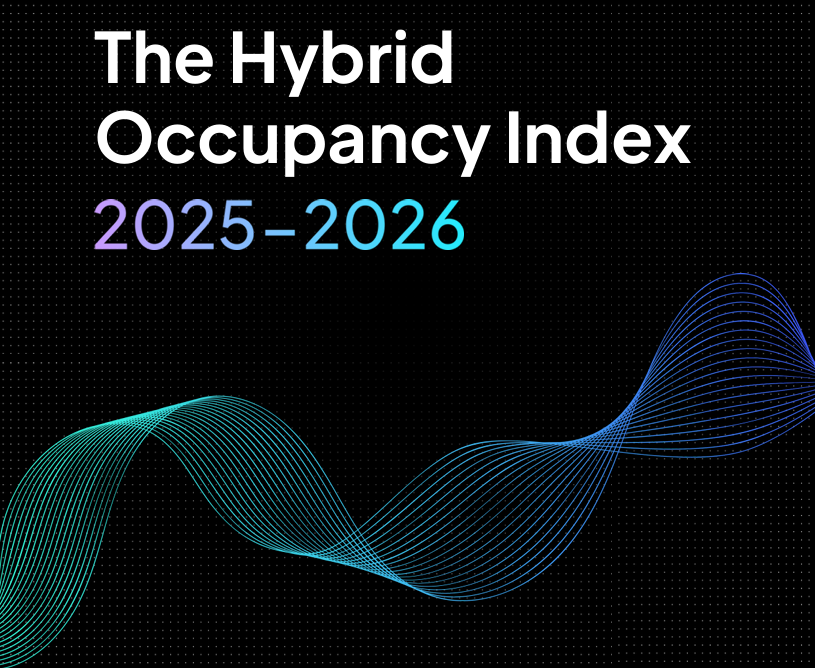
HubStar, a provider in dynamic workplace solutions, is set to publish its Hybrid Occupancy Index 2025-2026 which provides a comprehensive view of how employees are now using office spaces across more than 300 million square feet of buildings in 13 major countries.
The report aims to help workplace leaders, real estate strategists and HR teams understand how employee behaviours are evolving - and what that means for space planning, workplace strategy, and design in 2026.
As well as examining workplace trends in major cities like London, Toronto, New York City, Chicago, Stockholm and Amsterdam, the report provides several global takeaways.
1. Occupancy Peaks on Tuesdays
The report found that Tuesdays tend to have the highest occupancy of any weekday (peaking at 59% occupancy globally). This points to a growing need to spread office attendance more evenly across the week rather than levying three-day mandates. The report observes: “With 40-50% vacancy rates, the issue isn't space shortage but poor distribution… Organisations can look to more varied anchor days by team, or add incentives and events to flatten the peak in-office day.”
2. Meeting room mix no longer matches new usage patterns
The report found there are now fewer large in-person meetings (with 80% of meetings in rooms for six or fewer people) – yet large boardrooms with 17+ capacity are only 12% full on average. This suggests oversized boardrooms should be converted into multiple small meeting spaces or flex-size rooms to match actual collaboration patterns.
3. Solo work is wasting meeting room capacity for collaboration
The report found employees tend to use small meeting areas for individual calls or solo work, often resulting in two-person meeting rooms operating at just 43% capacity. This underscores a growing need for more purpose-built solo spaces (such as ‘Zoom rooms’ and quiet work pods) to free up collaboration spaces for actual meetings.
4. Informal spaces are the new workplace magnets
The Hybrid Occupancy Index found employees now tend to gravitate to spaces that blend hospitality with productivity, where work feels more natural and unstructured. This suggests organisations should consider investing in expanding collaboration areas designed for informal work and connection.
5. Subtle shift from open plan to semi-private, distraction-free zones
While 78% of desks remain open plan, the report identified a gradual increase in the use of cubicle-style spaces. This shift suggests a growing demand for more hybrid desk configurations that provide the right space mix for balancing distraction-free individual work with open collaboration, focus work, hybrid meetings, and casual conversations.
Steve Vatidis, HubStar’s Executive Chairman, said: “By comparing trends and usage patterns across space types like meeting rooms and collaborative areas, we have identified where people gravitate to, what is changing, and where the greatest opportunities for improvement lie.”
He added: “With more organisations looking to develop or re-evaluate their hybrid work strategy, reshape their real estate footprint, or enhance their employee experience, this report highlights actionable insights on key dynamics such as occupancy, utilization, and workspace preferences.”
Picture: A cropped image of the report's front cover.
Article written by Dave Mapps | Published 18 February 2026
infinitSpace will partner with German commercial real estate developer CG Elementum on two new projects. Both buildings are owned by the Gröner Group and are...
Read Full ArticleEmployee engagement is now the top priority for global businesses and nearly two-thirds are investing in their offices, according to a new global survey by ISS. The...
Read Full ArticleIWG, whose brands include Regus and Basepoint, is to pilot flexible office space within a Tesco supermarket in New Malden. Excess retail space at the South London...
Read Full ArticleFor anyone still in doubt: flexible working is the future, not a fad, says Karl Breeze from Matrix Booking. In this opinion piece, Karl lays out his recommendations...
Read Full ArticleAs the UK awaits the final stage of lockdown easing, research suggests workers are keen to swap home working for a more conventional office setup. Despite the obvious...
Read Full ArticleThe multinational oil company is considering closing half of its properties in some locations, in a move towards flexible working for 50,000+ office-based...
Read Full ArticleA provider of conference and training facilities has today announced that three of its eight venues will be available to rent as flexible office space on an hourly,...
Read Full ArticleA virtual seminar for 300 workplace leaders, hosted by workplace solutions provider HubStar, has highlighted the top five conundrums that are keeping workplace...
Read Full ArticleSimon Eastlake, former Managing Director at Office Space in Town, launches a new office search company, along with Co-Founder Colin Becker and Senior Associate Olly...
Read Full ArticleThe UK’s national charity for working parents and carers is developing a Family-Friendly Workplaces certification — the first of its kind in the...
Read Full Article