UK Businesses Are Overlooking A Growing Infrastructure Risk Beneath Their Feet
09 July 2026 | Updated 02 September 2026
The UK’s drainage infrastructure is under mounting pressure from age, demand and neglect. Much of the network is still rooted in Victorian-era design and is now expected to support modern buildings and usage it was never built for.
For businesses, that creates a growing but largely unrecognised infrastructure risk, one that sits beneath buildings, out of sight, until failures force it into view. According to Lee Carlin, Group CEO of drainage and plumbing service partner LDF Group, the issue is structural. “If you strip it right back, we’re still relying on infrastructure that was designed in a completely different era. It was built incredibly well for its time, but it wasn’t built for what we’re asking it to do now. You’ve got a population that’s grown by nearly 30 million people since those systems were first put in, buildings are busier, usage is heavier, and the margin for error is a lot smaller. But the system underneath hasn’t really changed to reflect that.”
A Systemic Gap Between Infrastructure and Reality
The core issue is not simply that drainage systems are old and in need of upgrades, it’s that the way buildings operate today has changed considerably, while the infrastructure hasn’t. Victorian networks were built around lower density, more predictable usage and far less pressure from peak demand. Today’s environments, particularly in retail, hospitality and healthcare for example, place sustained and often unpredictable strain on those same systems.
Carlin says that mismatch is where risk begins to build. “It’s easy to focus on the age of the infrastructure, but that’s only part of the story. The bigger issue is the gap between what those systems were designed for and how they’re actually being used day-to-day. You’ve got higher volumes, more constant usage and less tolerance for downtime. And then you add in things like wet wipes and grease build-up from commercial kitchens, which those systems were never built to cope with. That combination creates pressure that just wasn’t there before.”
Why Reactive Maintenance is Amplifying the Risk
Despite that pressure, LDF Group says most organisations still approach drainage in a largely reactive way: dealing with issues as and when they arise. However, that approach increasingly doesn’t stack up.
In practice, early issues like build-ups of fat and grease are missed or ignored and only surface when they trigger something more serious such as flooding or when the system backs up. At that point, response is urgent rather than planned, and costs can escalate quickly.
“A lot of businesses still see drainage as something you deal with when it stops working,” Carlin explains. “Historically, that’s probably been fine. But now, with the way buildings are being used, by the time it fails you’ve already lost control of the situation. You’re reacting under pressure, you’re paying more, and you’re often dealing with disruption that could have been avoided.”
Failure Rarely Stays Contained
When drainage issues do surface, the impact is rarely in isolation. A localised issue, whether that’s a blockage or overflow, can quickly affect core building functions, from toilets and kitchens to waste systems. In some cases, this can mean a partial or full closure.
For customer-facing environments, the implications extend far beyond maintenance. “Once drainage fails, it affects how a building operates straight away. Whether it’s a hotel, a leisure site, or a retail environment, if the building relies on footfall then you’re immediately into lost revenue, poor customer experience, and potential reputational damage.”
From Hidden Issue to Managed Risk
According to LDF Group, the organisations getting ahead of this are simply treating drainage differently. Rather than leaving it unmanaged, they’re building in visibility and addressing issues before they turn into operational problems.
“What changes isn’t the system itself, in fact, it’s the level of control you have over it,” Carlin says. “If you’re checking it, maintaining it, understanding how it’s performing, you take a lot of that unpredictability out. Whereas if you leave it, you’re essentially waiting for the worst-case scenario to happen.”
As pressure on infrastructure continues to grow, LDF Group expects drainage to become a more visible issue. For organisations that continue to overlook it, it will remain what it has always been: an invisible system, until it very suddenly isn’t.
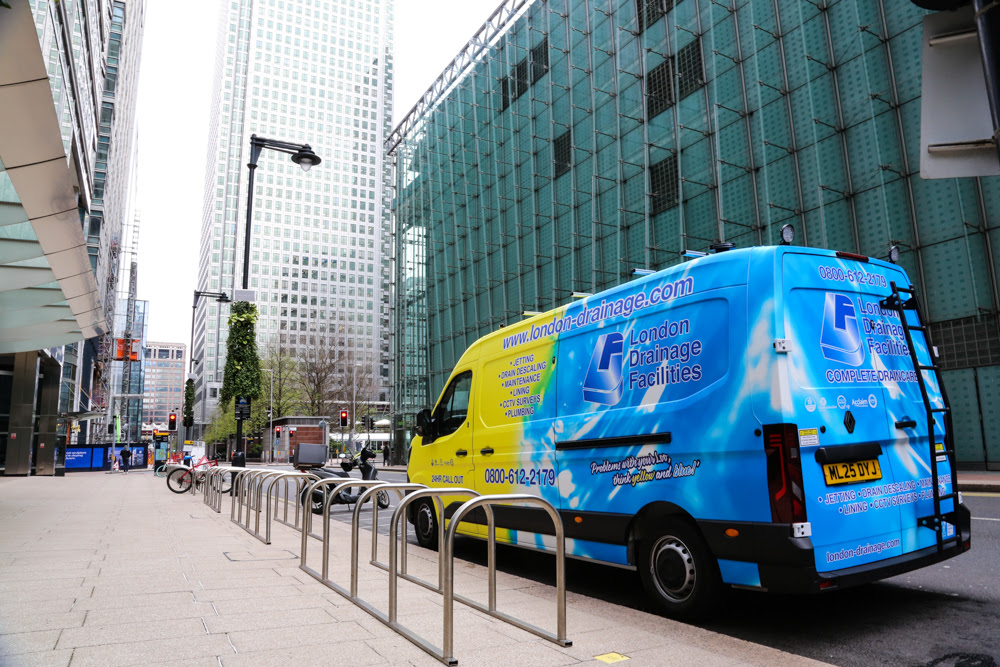
Picture: An image of an LDF van parked outside a building in London.
Article written by Lee Carlin | Published 09 July 2026
Why Siphonic Drainage Systems Are The Smart, Sustainable Choice For Facilities Managers
Hannah McNamee, Service Sales Manager at Capcon Engineering, discusses siphonic systems and how they can reduce risk, support ESG goals and help FMs run a more...
NSS, part of PTSG, has launched a free online Siphonic Health Check tool to help building owners, facilities managers and property professionals understand whether...
Technical services provider Mecsia has completed its acquisition of The Drain Group, a drainage specialist operating across the West Midlands.
The Drain Group will...
London Drainage Facilities Completes First Acquisition of 2025
London Drainage Facilities has acquired Lewes-based drainage and plumbing services provider BlockBusters.
This will allow London Drainage Facilities to expand its...
Jet Through Wins Drainage Works Contract With Greene King
Jet Through has won its bid to provide drainage services to one of the UK’s largest pub and brewery chains, Greene King.
The three-year contract will see...
Technical FM provider Thermatic has acquired PDS Drainage Solutions.
PDS’ position in the commercial drainage market in the UK will aid Thermatic’s’...
Beyond SCOP - Estimating Real World Heat Pump Performance With SPF
Rinnai Applied Head of Design Sean Ehlen evaluates the importance of heat pump system congruity utilising Seasonal Performance Factors (SPF) as the expected performance. Click Image To Read More
Energy Transition Update
TThisWeekinFM Guest Editor, Daniel Lynn, has picked a number of examples that demonstrate an international energy transition across separate regions of the globe. Click Image To Read More
Rinnai Director, Chris Goggin, looks at how heat pumps being classified as a main solution towards decarbonisation compares to the direction of the UK’s low carbon heating and hot water technology market. Click Image To Read More
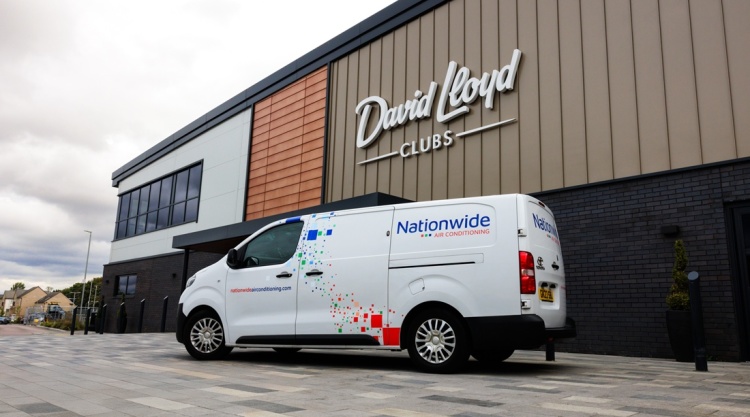
Nationwide Air Conditioning Extends David Lloyd Contract
Their 15-year partnership extended to cover Ireland, over 115 clubs and over 10,000 assets. Click Image To Read More
Boat Party 2026 Highlights
9 July 2026
400 FM professionals gather on the River Thames. Learn More Here >>
2027 Date announced soon.
Risk Now A Critical Piping System Specification
James Griffiths, Head of Projects at GF Building Flow Solutions, explores how pipe theft forces industry to reconsider long-established specification decisions. Click Image To Read More
.png)


.gif)
.gif)