




Eptura Names First Chief AI Officer
Eptura has announced the appointment of Nuala Larkin as its first Chief AI Officer (CAIO). The creation of the dedicated C-suite position marks the latest milestone...
Read Full Article

The Leading News & Information Service For The Facilities, Workplace & Built Environment Community
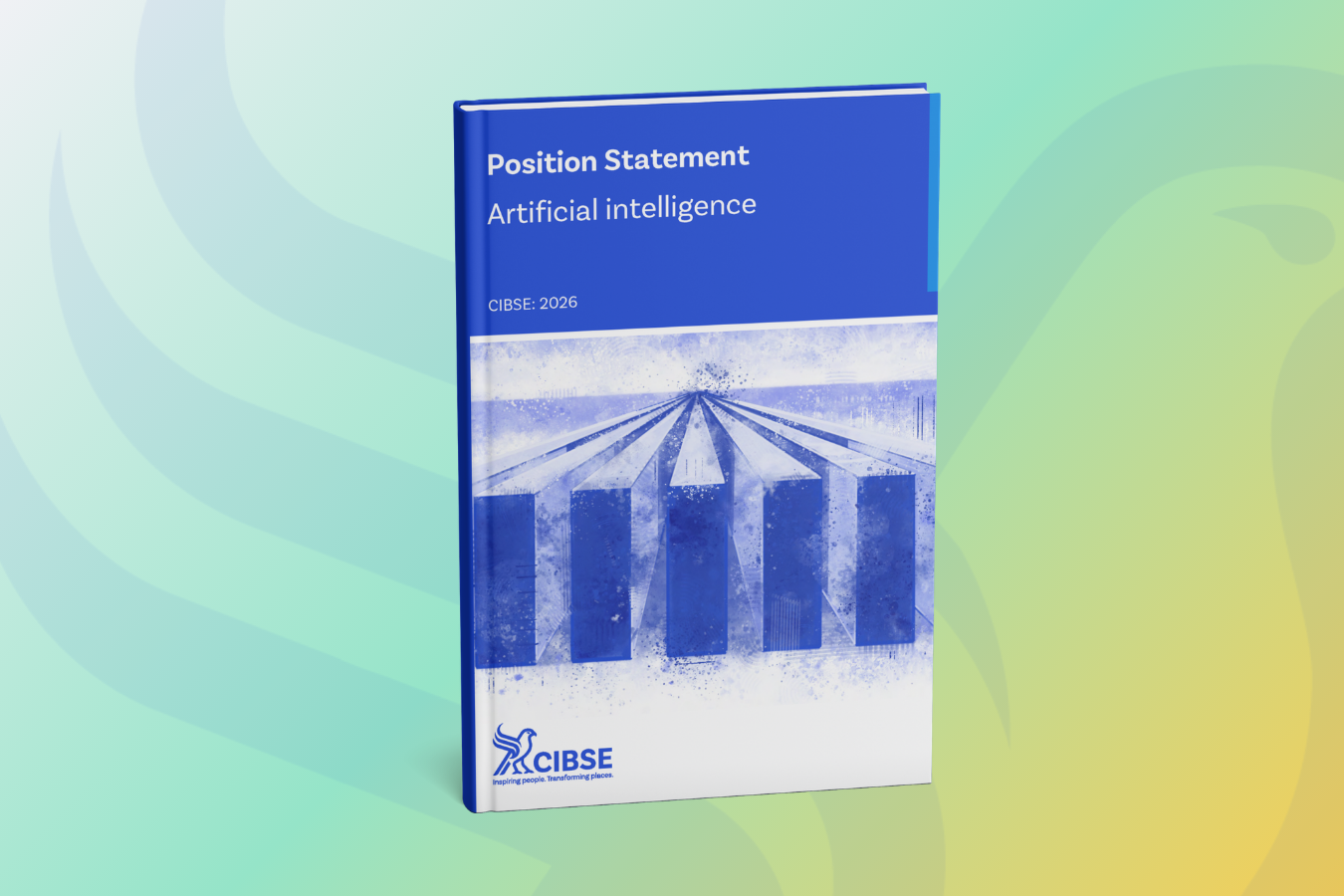
CIBSE has published a new position statement on artificial intelligence (AI), setting out its approach to the responsible adoption of AI across building engineering and reinforcing the Institution’s commitment to supporting engineers as the profession navigates rapid technological change.
Developed by CIBSE’s AI Working Group in response to the accelerating adoption of AI tools across professional practice, Position Statement – Artificial Intelligence1 explores the opportunities this technology presents for the building engineering sector, alongside the risks, responsibilities and safeguards that must accompany its use.
AI has the potential to transform building engineering practice, from amplifying engineering expertise and supporting building safety to enabling more complex tasks, reducing repetitive work and improving productivity. By freeing engineers to focus on higher-value activities, AI could also help unlock greater innovation and support the delivery of better-performing, more sustainable buildings.
However, realising these benefits requires a responsible, informed and considered approach. In a profession where building safety is paramount, the use of AI must be underpinned by professional judgement, human verification and a clear understanding of the legal and professional responsibilities involved.
The new position statement adopts an opportunity-led approach, recognising that the adoption of new technologies should not be unnecessarily discouraged, while emphasising that innovation must go hand in hand with professional integrity, competence and accountability.
A central principle of CIBSE’s position is that engineers remain professionally and legally accountable for the work they produce, regardless of whether AI tools have been used. AI-generated outputs must therefore be critically assessed and verified by qualified professionals, rather than accepted without scrutiny.
The statement also highlights the importance of ensuring that AI use aligns with CIBSE’s Code of Conduct and the principles of engineering excellence and sustainability. It emphasises the need for continued learning, critical thinking and the maintenance of fundamental engineering competencies as AI becomes increasingly integrated into professional workflows.
Through the work of its AI Working Group, CIBSE is taking a proactive approach to understanding the implications of this rapidly evolving technology and helping the profession navigate its adoption in a way that serves engineers, the built environment and society.
Recognising that AI capabilities, applications and regulatory requirements will continue to evolve, the position statement is intended as a starting point for discussion rather than a definitive or static framework. CIBSE will review its position regularly to ensure that it remains relevant and reflects developments in technology and professional practice.
The Institution is also encouraging engagement across its membership and the wider industry, welcoming constructive feedback, dialogue and cross-industry collaboration to help shape the future of responsible AI use in building engineering.
Ahmed Hegazi, Head of Knowledge and Digital at CIBSE said: ''CIBSE has always been at the forefront of building engineering, and our approach to AI is no different.”
Hegazi continued: “We see enormous opportunities for AI to enhance engineering expertise, drive innovation and deliver better buildings. But in an industry where safety, competence and accountability are paramount, technology must support professional judgement, never replace it.”
Hegazi added: “Our new position statement, shaped by leading industry expertise and rigorous peer review, sets out the principles for responsible AI adoption. Importantly, this is just the beginning of the conversation. We want to work with our members and the wider industry to ensure AI develops as a force for engineering excellence.”
1. Position Statement on Artificial Intelligence from CIBSE – see here.
Picture: An image of the front cover of the New Position Statement On Responsible AI Use In Building Engineering from CIBSE.
Article written by Dave Mapps | Published 20 November 2026
Eptura has announced the appointment of Nuala Larkin as its first Chief AI Officer (CAIO). The creation of the dedicated C-suite position marks the latest milestone...
Read Full ArticleArtificial intelligence (AI) is growing strongly across Europe, with AI clusters emerging in major office markets and smaller academic and specialist hubs, according to...
Read Full ArticleLolly, a provider of hospitality technology, has announced that SnapServe Pro, its new AI-powered tray-scanning solution, has entered live customer trials, marking a...
Read Full ArticleMike Talbot, Chief Technology Officer at SFG20, the industry standard for building maintenance, has shared his thoughts on technology adoption in the built sector and how...
Read Full ArticleAs investment in UK data centres continues to gather pace, Pieter Swart, Head of Specification, Fire & Modular Systems at Grundfos, is urging operators to prioritise...
Read Full ArticleAn industry first in facilities management: where automation was designed not to replace people, but to set them free. Facilities management businesses rarely...
Read Full ArticleLondon's office stock scores well on cyber resilience – but digital readiness is quietly undermining asset values. William...
Read Full ArticleThe hype around AI in FM should not be allowed to obscure the essential human element, says Joss Rennocks, Transformation Director at Bellrock. AI is changing...
Read Full ArticleDemis Hassabis, CEO and Co-Founder at Google DeepMind discusses the completion of their most ambitious building to date, Platform 37, located in the heart of...
Read Full ArticleAs with most industries, Artificial Intelligence continues to dominate the conversation in facilities management. Predictive maintenance, automated scheduling and...
Read Full Article