Only 24% Of FM Organisations Rate Themselves As ‘AI-Ready’
22 September 2026 | Updated 21 September 2026
Mike Talbot, Chief Technology Officer at SFG20, the industry standard for building maintenance, has shared his thoughts on technology adoption in the built sector and how data can be leveraged to make better strategic decisions.
Recent data reveals that only 2 in 5 UK businesses are currently adopting AI technologies.
A recent analysis of data from the ONS Business Report found that the number of UK businesses currently adopting AI technologies has increased by 8% since June of last year. Despite the improvement, this still means just over three-fifths (65%) of UK businesses are not embracing the technology.
The ONS data revealed that 59% of the businesses that are using AI tools are doing so to ‘improve business operations’, with a further 30% using it to ‘provide, or personalise, products or services to customers’.
SFG20’s State of Facilities Management Report 2026 revealed that, in the built sector, although over half of organisations rank digital transformation as highly important for their overall strategy, only 24% rate themselves as AI-ready. The industry report spotlights high costs (63%), integration (52%) and resistance to change (41%) as the main barriers to adopting new technologies across organisations.
Why Do Built Sector Professionals Need To Leverage The Benefits Of AI?
“Facilities management professionals are under increasing pressure to enhance efficiency, ensure compliance, and reduce costs amid challenges such as staff shortages and skill gaps. Traditional methods may no longer be enough to fully meet these demands.
“Artificial intelligence is emerging as a vital tool in this transformation, offering solutions that not only address operational challenges but also provide a competitive advantage in a market with tightening margins and regulations.
“The built sector recognises the importance of implementing AI, as shown by our State of FM Report, but there is often a lot of reluctance to do so. This is often due to concerns that technology will replace human expertise. Although it comes with its cons, when implemented effectively, AI can optimise maintenance costs, reduce unplanned downtime, enhance energy consumption, and is intended to build on, not replace, existing roles.
“By automating repetitive tasks and streamlining manual processes, AI enhances operational efficiency and helps standardise data. This allows teams to focus more on high-value, strategic decisions. Failing to adopt AI in today’s fast-evolving landscape risks missing key opportunities to stay competitive.”
How Can Organisations Effectively Encourage Technology Adoption?
“To motivate the majority, decision-makers need to see the technology in action and proof, through practical application, that the technology is effective and there is a clear return on investment. It requires the early adopters to throw open their doors and invite the sector to come and witness the opportunities. There needs to be more visible case studies with clear evidence of the benefits.
“Start with high-impact use cases, then invest in capability. Focus first on technologies that deliver measurable time and cost savings and reinvest those gains into the next phase of your digital strategy. Crucially, skills adoption must be built into the roadmap: if teams cannot fully utilise the tools being procured, targeted training and support should be addressed early to ensure technology delivers value and enables sustained digital transformation.”
Picture: An image of an open laptop with coding on the screen, positioned at an angle in front of a monitor.
Article written by Dave Mapps | Published 22 September 2026
AI Clusters Expand Across Europe In New Wave Of Office Demand
Artificial intelligence (AI) is growing strongly across Europe, with AI clusters emerging in major office markets and smaller academic and specialist hubs, according to...
Lolly, a provider of hospitality technology, has announced that SnapServe Pro, its new AI-powered tray-scanning solution, has entered live customer trials, marking a...
More Efficient Cooling Needed As UK Data Centre Demand Rises
As investment in UK data centres continues to gather pace, Pieter Swart, Head of Specification, Fire & Modular Systems at Grundfos, is urging operators to prioritise...
SFG20 Launches Ratification And Compliance Committee To Safeguard Maintenance Standards In The Age Of AI
SFG20, the industry standard for building maintenance, has announced the launch of its Ratification and Compliance Committee, a collective of leading industry bodies...
Penguin FM And TYTEN Build A Truly AI-Enhanced FM Helpdesk
An industry first in facilities management: where automation was designed not to replace people, but to set them free.
Facilities management businesses rarely...
The Human Layer: Understanding The Automation Paradox In Property And FM
The hype around AI in FM should not be allowed to obscure the essential human element, says Joss Rennocks, Transformation Director at Bellrock.
AI is changing...
Demis Hassabis, CEO and Co-Founder at Google DeepMind discusses the completion of their most ambitious building to date, Platform 37, located in the heart of...
Half Of FM Teams Are Not Confident In Achieving Compliance
Data from the latest SFG20 survey reveals the FM industry's biggest challenges, from compliance and budget constraints to technology and AI adoption.
According to...
Why We Need To Go Back To Basics When It Comes To AI
As with most industries, Artificial Intelligence continues to dominate the conversation in facilities management. Predictive maintenance, automated scheduling and...
Rinnai Director, Chris Goggin, looks at how heat pumps being classified as a main solution towards decarbonisation compares to the direction of the UK’s low carbon heating and hot water technology market. Click Image To Read More
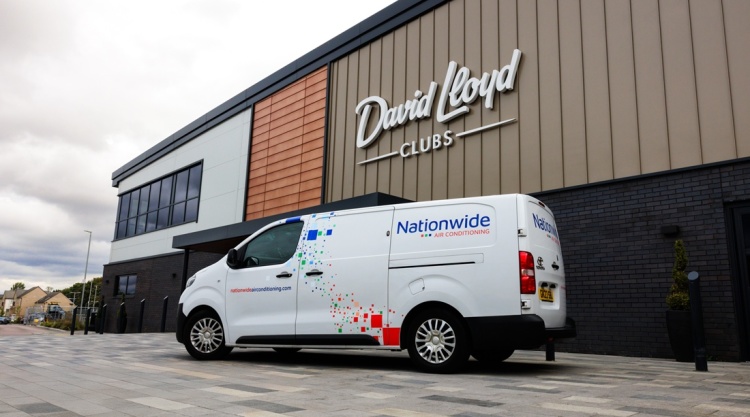
Nationwide Air Conditioning Extends David Lloyd Contract
Their 15-year partnership extended to cover Ireland, over 115 clubs and over 10,000 assets. Click Image To Read More
Andy Burnham: A New Direction On NetZero & Possible Future Pathways?
Rinnai Director Chris Goggin evaluates the new potential path of UK emissions reductions under Prime Minister Andy Burnham. Click Image To Read More
Boat Party 2026 Highlights
9 July 2026
400 FM professionals gather on the River Thames. Learn More Here >>
2027 Date announced soon.
Risk Now A Critical Piping System Specification
James Griffiths, Head of Projects at GF Building Flow Solutions, explores how pipe theft forces industry to reconsider long-established specification decisions. Click Image To Read More
Energy Transition Update
Guest Editor, Daniel Lynn, gives examples demonstrating the direction of a collaborative and global energy transition from separate international regions. Click Image To Read More
.png)
.gif)
.gif)