




How AI is Influencing Facilities Management
For Brett Ellis, Regional Facilities & Asset Manager Komatsu, a construction and mining multinational company, AI is the difference between days and weeks. Komatsu...
Read Full Article

The Leading News & Information Service For The Facilities, Workplace & Built Environment Community
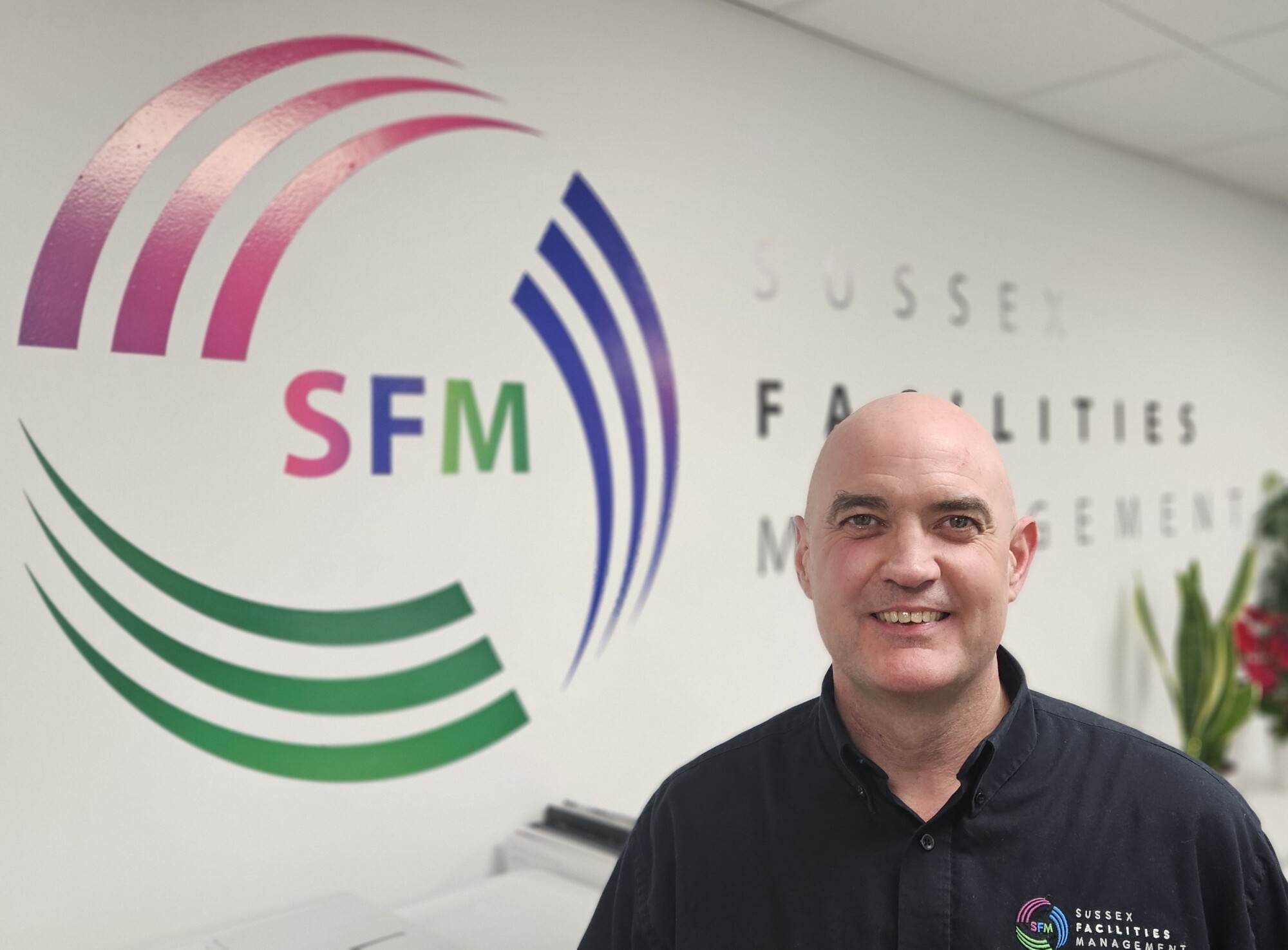
The big FM providers are all getting behind AI. But if you’re an SME, a scaled-down version of a corporate strategy might not be what your business needs. Mark Jackson, Managing Director and Co-Founder at Sussex Facilities Management, looks at what works.
Not that long ago, SME founders and directors might have looked at AI in facilities management and thought ‘not for us’. Dedicated facilities teams and complex CAFM systems were for larger conglomerates with expansive teams and data analysts.
How could predictive maintenance, smart sensors and AI-powered service delivery work in a 20-person office environment? With so many providers now selling some version of ‘AI-powered’, has it got harder for smaller businesses to cut through the hype and make the right choice?
My answer, having spent years running an FM business that works with SME clients, is no. AI has actually made the genuine differences between providers easier to spot – as long as you know what to look for.
Why The Sensor Business Case Doesn’t Scale Down
Occupancy-based cleaning is a good example of AI working really well at a corporate scale. Real estate firm JLL1, for instance, introduced a dynamic cleaning service for one of its clients and delivered a 15% reduction in time spent cleaning underused spaces.
But if you take a 20-person office, cleaning might cost, say, £5,000 a year. So, the saving may technically exist, but it’s unlikely to cover the hardware and installation needed to realise it – unless you’re refurbishing anyway and it’s a secondary addition.
This is the trap SMEs can fall into. A provider suggests an impressive sensor network and it’s difficult to tell whether it’ll save you money or not.
Where AI Actually Matters
For smaller businesses, the real value of AI isn’t in futuristic tech – it’s in everyday operations.
Take maintenance. Companies love to hype up predictive capabilities, but a small business doesn’t need a building packed with expensive sensors. You just need a software provider whose system is smart enough to spot patterns in your call-out history and parts usage, warning you when a specific asset is about to give up.
The same applies to daily admin. Automated invoice processing, quick draft visit reports and smart scheduling don’t require heavy upfront investment, meaning you see the returns immediately. It’s a lifesaver for compliance, too. Missing a statutory test or a certification renewal carries massive risk when you don’t have a dedicated compliance manager to track the paperwork.
Behind The Hype
Data from Capital on Tap2 shows that the number of UK small firms paying for AI tools jumped from 1.1% to 12.8% between early 2023 and mid-2026. Yet look at the actual cash and AI still makes up a tiny fraction of total business spending. Small businesses are definitely experimenting, but they’re playing it incredibly safe with their budgets.
Here are some key questions to get you on the right track.
AI Trust Is Falling
Despite everyone using it, people are actually getting more sceptical. KPMG’s latest global trust study3 shows that only 46% of us trust AI systems.
But this shouldn’t scare small firms away from AI entirely. It’s just a reminder to stop copy-pasting corporate tech strategies that were never designed for a 20-person office.
Always ask where it delivers commercial benefit relative to costs. For most smaller businesses, that answer points towards smarter processes.
Before investing in smart-building infrastructure, it’s worth asking whether the everyday management of your facilities has already been optimised. For a lot of SMEs, that’s where the real value is.
1. JLL Client Case Study – see here.
2. Data From Capital on Tap – see here.
3. KPMG’s Global Trust Study – see here.
Picture: An image of Mark Jackson, Managing Director and Co-Founder at Sussex Facilities Management.
Article written by Mark Jackson | Published 06 November 2026
For Brett Ellis, Regional Facilities & Asset Manager Komatsu, a construction and mining multinational company, AI is the difference between days and weeks. Komatsu...
Read Full ArticleJLL Property Assistant delivers recommendations for property managers via a natural language chat interface. Using data from PropTech platforms, including JLL's...
Read Full ArticleJLL has released a suite of software services that claim to be the “first comprehensive, ultra-secure AI platform for the commercial real estate...
Read Full ArticleGlobal commercial real estate and investment management company JLL has unveiled JLL GPT, the first large language model purpose-built for the commercial real estate...
Read Full ArticleIn a move to help deliver more powerful insights to its clients, JLL has reached an agreement to acquire Skyline AI. Skyline AI uses unique data sets, AI and...
Read Full ArticleTerry Keller, Chief Technology Officer at MRI Software, looks at why cybersecurity is increasingly becoming a challenge for facilities managers, rather than something...
Read Full ArticleSINGU provides AI-powered, cloud-based software for property, facilities, maintenance, ESG and building operations. Bringing together expertise from Micad, Synbiotix and...
Read Full Article1 Broadgate is more than a flagship office; it's a living example of the strategies, frameworks, and partnerships JLL bring to their clients every day. This article...
Read Full ArticleArtificial intelligence (AI) is growing strongly across Europe, with AI clusters emerging in major office markets and smaller academic and specialist hubs, according to...
Read Full ArticleLolly, a provider of hospitality technology, has announced that SnapServe Pro, its new AI-powered tray-scanning solution, has entered live customer trials, marking a...
Read Full Article