Overheating Concerns Put Building Temperature Control Under The Spotlight
18 August 2026 | Updated 02 September 2026
Glynn Williams, Senior Area Sales Director for UK & Ireland at Grundfos Commercial Building Services advises that new climate projections suggest UK buildings will face more frequent and prolonged periods of hot weather, increasing pressure on employers, building owners and facilities managers to maintain comfortable and productive indoor environments.
This issue is particularly timely. The UK has already recorded three heatwaves in 2026, with temperatures reaching record highs in both May and June, prompting many organisations to ask whether their cooling systems are up to the job.
According to the Climate Change Committee’s recent A Well-Adapted UK report1, the UK was built for a climate that no longer exists, with extreme heat identified as one of the most significant risks facing people, buildings and infrastructure over the coming decades.
The report warns that temperatures above 40°C are expected to occur across the UK by 2050, while periods of hot weather are set to become longer and more frequent.
With overheating a pressing concern across the UK, Grundfos is highlighting the importance of how heating and cooling systems are controlled and managed throughout a building.
For many commercial buildings, temperature-related challenges are not necessarily caused by insufficient heating or cooling capacity. Instead, systems are often operating in buildings that have changed significantly since they were first installed.
According to Grundfos, addressing these challenges does not always require additional heating or cooling capacity. In many cases, improvements can be achieved through better control of existing systems.
Solutions such as intelligent mixing loops and variable-speed pumping systems can continuously adapt to changing demand, helping balance flow and temperature across different zones of a building. This can support more stable indoor conditions while reducing unnecessary energy consumption.
As warmer conditions and changing building demands place greater pressure on indoor environments, Grundfos recommends building owners should regularly assess whether their heating and cooling systems remain aligned with current operational requirements.
Glynn Williams, Senior Area Sales Director for UK & Ireland at Grundfos Commercial Building Services, said: “Many commercial buildings experience temperature differences from one area to another throughout the day. One meeting room may feel too warm, while another area feels too cold, even though the overall system is operating as intended. As buildings evolve and occupancy patterns change, systems that once worked well can struggle to deliver consistent temperatures across different spaces.”
Williams explained: “Temperature control is often viewed as a heating or cooling issue, but in reality, it is frequently a distribution and control challenge. When temperatures become uncomfortable, the solution is not always to increase heating or cooling capacity. Often, the bigger opportunity lies in improving how heat and cooling are distributed and controlled throughout the building.”
Williams continued: “Many are surprised by how much impact improved temperature control can have. It can help create a more comfortable indoor environment while reducing energy use, and it provides a system that can adapt as buildings change over time.”
Williams concluded: “Buildings rarely operate in the same way they did when their systems were first installed. Improved control helps create flexible, responsive systems that support both comfort and energy efficiency as periods of warmer weather become more common.”
1. Climate Change Committee’s A Well-Adapted UK report – see here.
Picture: An image of a corporate office in the evening.
Article written by Dave Mapps | Published 18 August 2026
As Cooling Becomes Critical Infrastructure, Is It Time To Rethink How We Deliver It?
As the UK experiences increasingly frequent periods of extreme heat, Graeme Hamilton, Managing Director of Energy at OCS, argues that cooling is rapidly becoming critical...
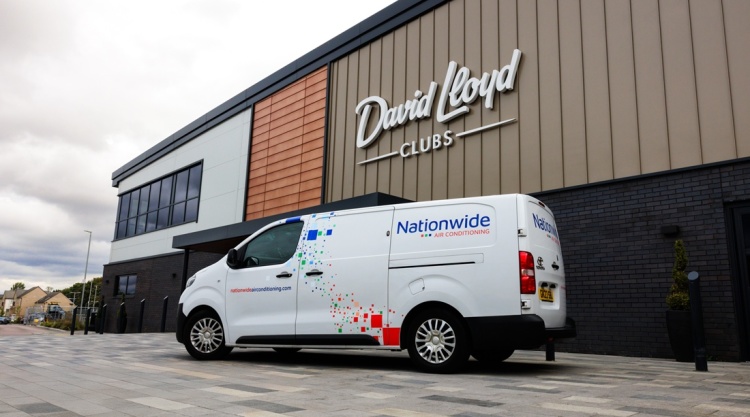
Nationwide Air Conditioning Extends 15 Year Partnership With David Lloyd Clubs
A national partnership.
Renewed and extended.
Nationwide Air Conditioning, a 100% employee-owned business, continues its fifteen-year engineering partnership with...
More Efficient Cooling Needed As UK Data Centre Demand Rises
As investment in UK data centres continues to gather pace, Pieter Swart, Head of Specification, Fire & Modular Systems at Grundfos, is urging operators to prioritise...
60% Of Businesses Look To Adapt Operations In Response To Extreme Heat
According to the Q2 Barclays Business Prosperity Index1, six in 10 businesses surveyed (60 per cent) have either increased investment to adapt to extreme heat (37 per...
Sports Venues Present Some Of The Most Complex Maintenance Challenges
From seasonal occupancy to multi-use facilities, SFG20 outlines the maintenance challenges that directly impact safety, compliance and operational performance of sports...
Carrier Solutions UK Joins Call For Better, Safer Cooling
Carrier Solutions UK has responded to the growing national debate around the role of air conditioning in homes and public buildings, welcoming recent calls for schools,...
Flex Appeal: How FM Needs To Support The Changing Face Of Retail
Joe Lyon, CEO of Thermatic, highlights that as retail spaces evolve into dynamic hubs for seasonal campaigns, click-and-collect, and community events, facilities...
Stadium Pump Upgrade Saves 422,000 kWh Annually At Major UK Venue
As global anticipation builds ahead of this summer’s FIFA World Cup, there is an increasing focus on the performance and efficiency of the infrastructure that...
Bellrock Partners With Demand Logic To Scale Data-Driven Building Performance
The Bellrock and Demand Logic partnership supports the delivery of Bellrock’s data-led, predictive maintenance and real-time monitoring platform, Symphony....
Daikin Rental Solutions Accelerates UK Expansion With Major Multi-Technology Fleet Investment
Daikin Rental Solutions has announced a major expansion of its UK rental fleet, combining new high-capacity cooling systems, low-carbon heating solutions, process cooling...
Beyond SCOP - Estimating Real World Heat Pump Performance With SPF
Rinnai Applied Head of Design Sean Ehlen evaluates the importance of heat pump system congruity utilising Seasonal Performance Factors (SPF) as the expected performance. Click Image To Read More
Energy Transition Update
TThisWeekinFM Guest Editor, Daniel Lynn, has picked a number of examples that demonstrate an international energy transition across separate regions of the globe. Click Image To Read More
Rinnai Director, Chris Goggin, looks at how heat pumps being classified as a main solution towards decarbonisation compares to the direction of the UK’s low carbon heating and hot water technology market. Click Image To Read More
Nationwide Air Conditioning Extends David Lloyd Contract
Their 15-year partnership extended to cover Ireland, over 115 clubs and over 10,000 assets. Click Image To Read More
Boat Party 2026 Highlights
9 July 2026
400 FM professionals gather on the River Thames. Learn More Here >>
2027 Date announced soon.
Risk Now A Critical Piping System Specification
James Griffiths, Head of Projects at GF Building Flow Solutions, explores how pipe theft forces industry to reconsider long-established specification decisions. Click Image To Read More
.png)
.gif)


.gif)