
.gif)
.gif)
Turning SuDS Funding Into Lasting Value
Applications are now open for the latest Department for Education (DfE) SuDS in Schools grant scheme. Choosing the right supplier can help ensure such projects meet...
Read Full Article.png)

The Leading News & Information Service For The Facilities, Workplace & Built Environment Community
Primary schools and trusts across the UK are being invited to express interest in potentially taking part in a pilot project starting in the Autumn term which aims to reduce absence rates using targeted hygiene.
The industry body for the UK’s £72bn cleaning, hygiene and waste sector, the British Cleaning Council (BCC), working with sector partners including SC Johnson Professional, has designed the initiative to explore whether a practical, evidence-informed targeted hygiene approach can help schools support attendance at the time of the year when winter illnesses such as flu are most common.
Winter illnesses continue to create significant disruption for schools each year, contributing to increased pupil and staff absence, operational pressures, safeguarding challenges and disruption to learning. Department for Education (DfE) figures for 2024/25 say approximately 42.2 million pupil days were lost specifically due to illness.
The initiative seeks to work collaboratively with a small number of schools to assess whether focusing hygiene interventions at key moments of infection risk can help reduce avoidable disruption. The pilot project will gather evidence on whether such an initiative could be introduced more widely.
Rather than increasing cleaning activity across all areas at all times, the targeted hygiene approach concentrates efforts on when and where infection spread is most likely to occur, such as when pupils and staff arrive and leave school, before they eat and after toilet use, and focuses on frequently touched, shared surfaces like door knobs and desks.
The pilot, has been specifically designed to minimise any additional burden on schools and will come at no extra cost. It relies only on routine attendance and absence data already collected through existing systems, with no medical testing, individual pupil monitoring or changes to attendance policies involved.
Schools could participate anonymously and results will be reviewed only at aggregated group or trust level. Findings of the pilot project will not be used for inspection, regulatory purposes or school-level performance judgements.
Schools expressing an interest will be given details of the proposal and there will be an opportunity for discussions and questions before any decisions are made. Around 14 – 16 schools of the right profile are required.
Participating schools would implement a structured but flexible package tailored to their own environment. This includes school-specific hygiene mapping, support for hand hygiene infrastructure, targeted cleaning protocols for high-touch surfaces and simple behavioural prompts for pupils and staff.
Participating schools will contribute to a wider feasibility and learning exercise designed to assess whether targeted hygiene can be implemented consistently across different school environments and whether it demonstrates a clear direction of operational benefit that could support future wider rollout.
The targeted hygiene approach is officially endorsed by public health groups like the International Scientific Forum on Home Hygiene (IFH) and the Royal Society for Public Health (RSPH), and it was developed with SC Johnson Professional in alignment with World Health Organisation (WHO) guidelines as a simple, actionable and science-lead framework for schools, workplaces and public facilities.
The regime aligns with the BCC’s Strategic Framework for Achieving Cleanliness and Hygiene in Public Environments (2025), ensuring the approach reflects nationally recognised, evidence-informed principles for hygiene management in educational settings.
Jim Melvin, BCC Director for Government lobbying, said: “Schools continue to face major operational pressures during the winter illness season and many are looking for practical ways to strengthen resilience without creating additional workload for staff. We hope that targeted hygiene could make a difference to this burden of illness on pupils, staff and school communities.”
Melvin added: “This pilot is intended to work alongside normal school operations by focusing hygiene effort where it can potentially make the greatest impact. We are keen to work with schools and trusts that are interested in contributing to an important piece of operational learning for the education sector.”
Schools and academy trusts interested in exploring participation in the targeted hygiene school pilot are invited to contact BCC Company Secretary Simon Hollingbery at compsec@britishcleaningcouncil.org.
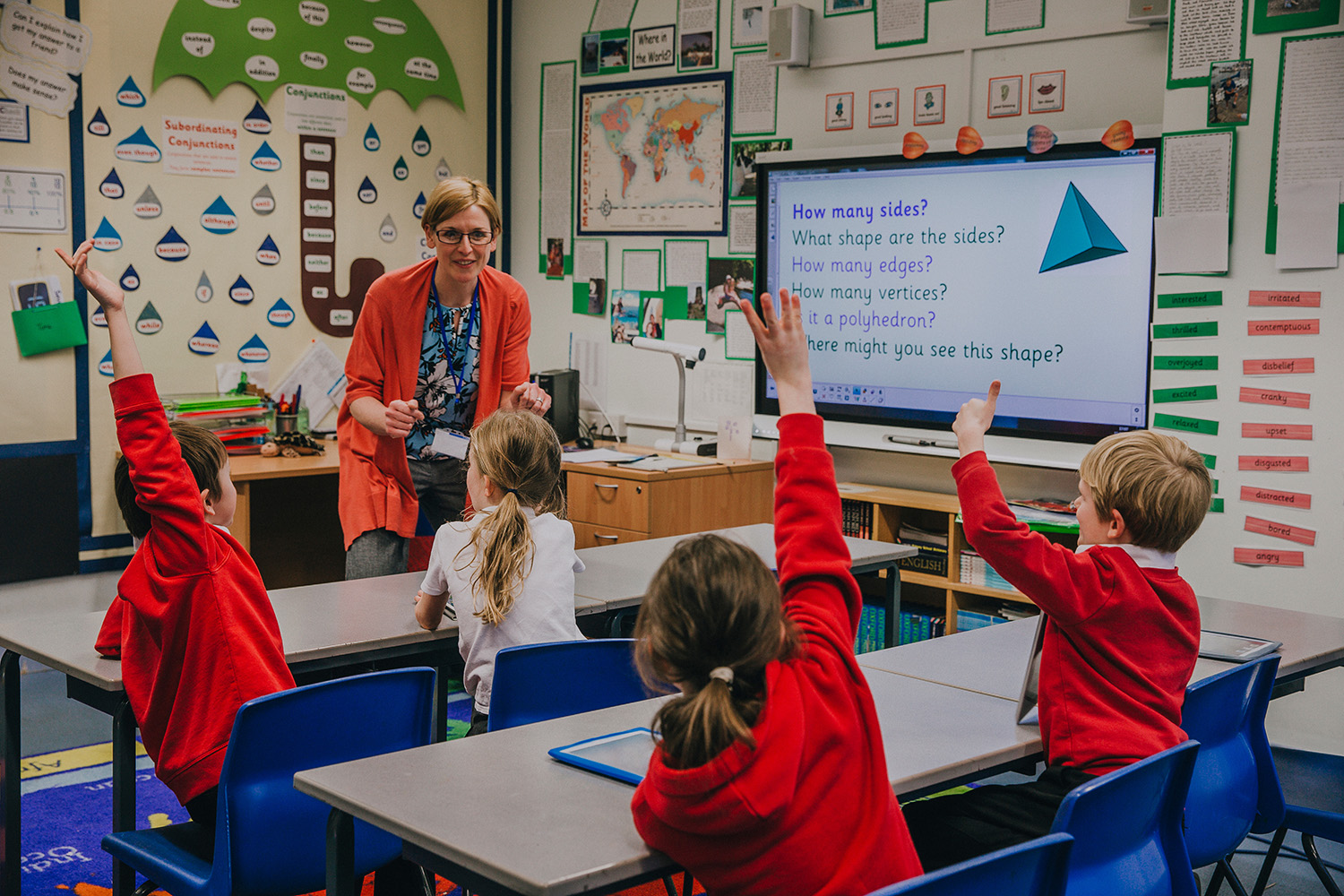
Picture: An image of a teacher engaging with four pupils in a classroom. Three of the pupils have their hand raised.
Article written by Dave Mapps | Published 03 July 2026
Applications are now open for the latest Department for Education (DfE) SuDS in Schools grant scheme. Choosing the right supplier can help ensure such projects meet...
Read Full ArticleAn innovative new construction initiative will see a group of colleges from across Yorkshire and the Humber become partners with the Supply Chain Sustainability School...
Read Full ArticleThe value of the cleaning, hygiene and waste industry continues to grow, reaching almost £72bn according to latest figures, with the number of staff employed and...
Read Full ArticleBradford College has officially opened its latest multi-million-pound facility after nearly two years under construction. The new Junction Mills building on Thornton...
Read Full ArticleThe British Cleaning Council says that new World Health Organisation Global Handwashing Standards must be combined with higher standards of cleaning in public spaces to...
Read Full ArticleThe value of the cleaning, hygiene and waste industry has jumped by more than ten per cent in the last year. The British Cleaning Council’s (BCC) annual research...
Read Full ArticleThe industry body for the cleaning sector wants the government to establish minimum standards of cleaning in workplaces to reduce sick days and protect against...
Read Full ArticleThe industry body for the cleaning sector is hopeful that the new Labour government will be more receptive to its lobbying campaign. The British Cleaning Council (BCC)...
Read Full ArticleA final list of schools and colleges affected by Reinforced Autoclaved Aerated Concrete in England has been published, alongside a plan to remove it from all...
Read Full ArticleThe Department for Education has pledged to clarify how it will meet its sustainability targets. Baroness Barran, Parliamentary Under-Secretary of State at the...
Read Full Article