Applications are now open for the latest Department for Education (DfE) SuDS in Schools grant scheme. Choosing the right supplier can help ensure such projects meet funding requirements, writes Lorna Davis, Director at Sudsplanter Ltd.
Increasing investment in climate resilience is creating new opportunities for organisations to secure grants for environmental improvement projects, including sustainable drainage. Across the UK, a growing number of grant schemes are supporting initiatives that reduce flood risk, improve biodiversity, enhance public spaces and help communities adapt to climate change.
The application window for the Department for Education (DfE) latest SuDS in Schools1 scheme opened in August and closes on 2 November 2026. Aiming to reduce surface water flood risk in the school estate, the programme can fund up to 50% of the total project cost. Those invited to apply for a grant include state-funded and voluntary-aided schools in England, lead local flood authorities, water companies and non-profit organisations.
Eligible organisations for other grants – such as the National Lottery Heritage Fund's Nature Towns and Cities partnership and water company schemes - can include community groups, healthcare facilities, housing associations and parish councils, as well as some businesses.
Many funding providers favour projects that deliver multiple environmental and social benefits rather than addressing a single issue - and successful applications often demonstrate how one investment can provide a range of positive outcomes.
A well-designed sustainable drainage system (SuDS) project can help reduce surface water flooding, create a wildlife habitat, improve the appearance of a site, enhance wellbeing and provide opportunities for education and engagement. This makes SuDS a suitable option for a range of funding programmes.
With the right design, even relatively modest grants can fund SuDS that deliver significant and measurable environmental and community benefits.
For organisations applying for funding, it is important to demonstrate how the project – whatever size - will deliver the greatest possible impact. This may include showing how surface water runoff would be reduced, how biodiversity would be enhanced, how equipment would be maintained and how the applicant would engage local communities.
Small, specialist suppliers are often best placed to support grant-funded SuDS projects. By working closely with project teams from the earliest stages, they can help shape schemes and provide technical data that aligns with funding criteria
Having worked on a wide range of grant-funded SuDS schemes, Sudsplanter has supported organisations through every stage of the process, from feasibility studies, hydraulic modelling and site surveys to detailed design, construction, technical compliance, maintenance planning and educational engagement.
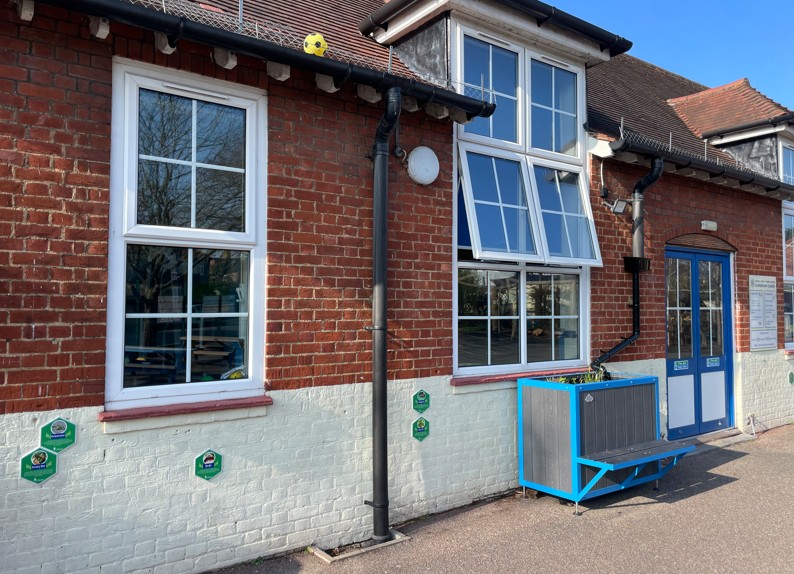
This includes working with many local authorities and hundreds of schools, such as in the London Borough of Merton, where we installed SuDSPlanter rain gardens in seven schools to help manage surface water runoff. Between three and six bespoke units were installed at each site, with plant varieties selected by our horticulturalists, along with colourful information boards.
SuDSPlanter’s education specialists ran sessions with pupils to teach them about the water cycle and how to care for the plants and the new habitats. Long-term maintenance of the systems will be led by each school.
Projects like this demonstrate how a single scheme can deliver multiple benefits to maximise the value of every investment, supported by robust performance data and post-installation reporting where required.
TfL To Make Capital’s Transport Services More Resilient, Reliable And Sustainable
Transport for London (TfL) has unveiled its updated Corporate Environment Plan1, which sets out how TfL will continue to take action to improve air quality, reduce carbon...
Primary Schools Wanted For BCC Targeted Hygiene Pilot Project
Primary schools and trusts across the UK are being invited to express interest in potentially taking part in a pilot project starting in the Autumn term which aims to...
Sustainable Construction Partnership Announced By Yorkshire & Humber College Network
An innovative new construction initiative will see a group of colleges from across Yorkshire and the Humber become partners with the Supply Chain Sustainability School...
Bradford College Opens £19.3m Motor Vehicle & Engineering Building
Bradford College has officially opened its latest multi-million-pound facility after nearly two years under construction.
The new Junction Mills building on Thornton...
JLL Foundation $4.75m in Loans to 18 Green Startups
Through its not-for-profit foundation, JLL has provided $4.75 million of zero-interest loans to 18 companies in the decarbonisation sector.
JLL Foundation, which was...
Why are Facilities Managers Getting Involved in No Mow May?
Traditionally an awareness month targeted at the residential market, facilities managers are taking No Mow May as an opportunity to promote biodiversity across their...
Government Publishes Plan to Remove RAAC From all Schools in England
A final list of schools and colleges affected by Reinforced Autoclaved Aerated Concrete in England has been published, alongside a plan to remove it from all...
Government to Publish Net-Zero Roadmap for Education Estate
The Department for Education has pledged to clarify how it will meet its sustainability targets.
Baroness Barran, Parliamentary Under-Secretary of State at the...
Mandatory Biodiversity Net Gain rules, where developers must avoid loss of habitat on land they plan to build on, will be delayed until January 2024.
Originally set to...
Asbestos Register Collaborates With EntrySign to Reduce Accidental Asbestos Exposure in Schools
The UK National Asbestos Register has joined forces with a contractor management company to help mitigate the risks of accidental asbestos exposure in UK schools and...
Beyond SCOP - Estimating Real World Heat Pump Performance With SPF
Rinnai Applied Head of Design Sean Ehlen evaluates the importance of heat pump system congruity utilising Seasonal Performance Factors (SPF) as the expected performance. Click Image To Read More
Energy Transition Update
ThisWeekinFM Guest Editor, Daniel Lynn, has picked a number of examples that demonstrate an international energy transition across separate regions of the globe. Click Image To Read More
Boat Party 2026 Highlights
9 July 2026
400 FM professionals gather on the River Thames. Learn More Here >>
2027 Date announced soon.
Are Heat Pumps Really The Future?
Rinnai Director, Chris Goggin, looks at how heat pumps being classified as a main solution towards decarbonisation compares to the direction of the UK’s low carbon heating and hot water technology market. Click Image To Read More
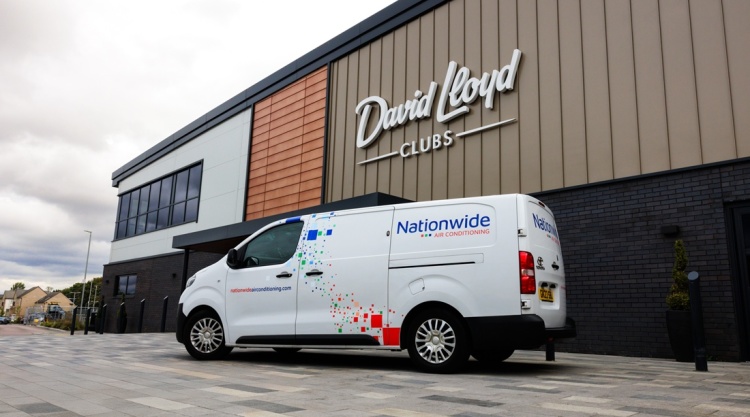
Nationwide Air Conditioning Extends David Lloyd Contract
Their 15-year partnership extended to cover Ireland, over 115 clubs and over 10,000 assets. Click Image To Read More
.png)

.gif)

.gif)