.gif)
.gif)

Quidvis Acquired by Kings Secure Technologies
Kings Secure Technologies (KST) today announced that it has completed the acquisition of Fire Risk Assessment and risk management reporting specialist, Quidvis...
Read Full Article

The Leading News & Information Service For The Facilities, Workplace & Built Environment Community
As commercial buildings continue to adapt through refurbishments, changing occupancy levels and evolving workplace practices, fire safety planning also needs to evolve. Triton Security explores seven common misconceptions that can leave building owners, occupiers and facilities teams exposed to unnecessary risk.
Fire safety is one of those responsibilities that often doesn’t receive the attention it deserves - until something goes wrong, that is.
For many businesses, compliance has fallen into the trap of being a tick-box exercise that’s centred around annual inspections, manual training exercises, and having the right paperwork in place. And although these are still important, they also provide organisations with a false sense of security when it’s assumed that compliance alone is enough.
The reality is that fire safety is an ongoing process that’s never quite complete, as opposed to a one-off task. Teams grow, buildings change, operations adapt, and layouts evolve - and so do the risks alongside them.
However, many organisations continue to operate under outdated assumptions. This leaves them exposed to not only enforcement action, but to unnecessary risks for employees, customers, visitors and beyond.
For Triton Security, the seven most common misconceptions around fire safety that businesses should be challenging are:
Myth 1: “We’ve Passed Our Fire Risk Assessment, So Everything Is OK”
While important, a fire risk assessment is only a snapshot in time. All it shows is that risks that have been considered based on the building, its usage, and the people inside it at that point in time. However, workplaces are constantly changing - whether it’s day-to-day or over the course of a few weeks. That could be the introduction of new equipment, office refurbishments or redesigns, storage changes, or different ways of working altogether - all of which can alter the level of risk involved.
Rather than a one-and-done, your fire risk assessment should be viewed as a living document that gets reviewed regularly - not filed away until the next inspection.
Myth 2: “Fire Safety Sits With One Person”
While a single person or facilities manager is often awarded responsibility, truly effective fire safety relies on a collective approach. Employees will need to have a thorough understanding of evacuation procedures, visitors will need to follow all site protocols, managers will need to know how to properly respond if an incident occurs, and leadership will have the responsibility of ensuring that fire safety is always a priority.
Being fully prepared for fire-related emergencies cannot sit with one person alone.
Myth 3: “We Have Fire Extinguishers So We’re Fully Prepared”
Fire extinguishers are key, but only if they’re the appropriate kind, properly maintained, and people know when - and when not - to use them. If someone attempts to tackle a fire without the proper training, then it can put everyone within the building at risk.
Myth 4: “We’ve Never Had A Fire, So Our Risk Is Low”
Unfortunately, past performance is not a reliable indicator of future risk. Even the most serious fire incidents can occur in a building or organisation that has never experienced one in the past, making complacency a huge risk.
The most effective fire safety strategy is about being prepared for low-frequency and high-impact events - rather than assuming that it’ll never happen to you.
Myth 5: “Fire Safety Is All About Compliance”
Does compliance matter? Absolutely. But hitting the minimum legal requirements is the bare minimum; organisations need to aim higher. Having strong fire safety in place not only protects people and property, but also supports business continuity, safeguards reputation, and reduces disruption should - despite all efforts - an incident occur.
When seen in this way - as opposed to a box-ticking exercise - fire safety becomes an investment in resilience, rather than a regulatory obligation.
Myth 6: “Evacuation Plans Only Matter In An Emergency”
Whether or not your evacuation plan will be successful and effective is determined long before the fire alarm sounds. Holding regular drills, ensuring clear communication, having updated procedures, and a complete understanding of how the most vulnerable in your building will be supported are all factors that contribute to a response that’s calm and effective.
Myth 7: “Fire Safety Doesn't Need Reviewing Unless Regulations Change"
If legislation hasn’t changed, then neither have your risks - right? Wrong.
One of the biggest mistakes businesses make is assuming that their operations aren’t constantly changing, because they are. Hybrid and flexible working, new tech, rising and falling occupancy levels, and building modifications can all have subtle yet significant implications when it comes to fire safety planning.
Holding regular reviews of the systems you have in place can ensure that your safety measures remain practical, proportionate, and highly effective.
Organisations that have the strongest fire safety cultures are rarely those that skate by doing the bare minimum; but rather the ones who see fire safety as a wider commitment that involves protecting people and property, maintaining operational resilience, and building confidence across the board.
At the end of the day, good fire safety isn't about passing inspections; it’s about making sure that - should the unexpected happen - everyone knows what to do, how to respond, and the systems work as they should.
Fire safety should never be viewed as a standalone compliance access, but rather a key part of responsible business management.
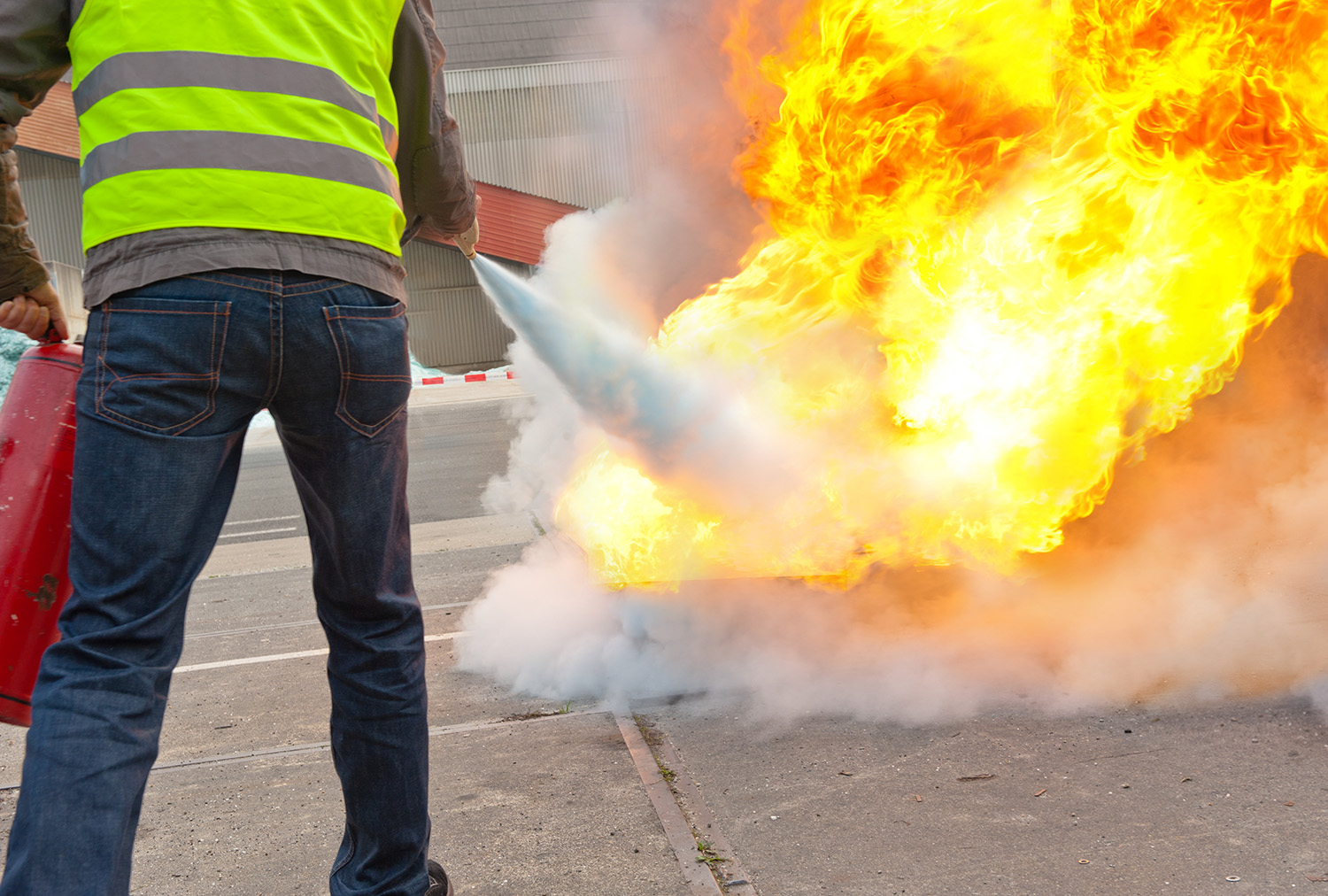
Picture: An image of a person wearing a high-vis and using a fire extinguisher on a fire.
Article written by Triton Security | Published 25 August 2026
Kings Secure Technologies (KST) today announced that it has completed the acquisition of Fire Risk Assessment and risk management reporting specialist, Quidvis...
Read Full ArticleCommercial property owners and their tenants are being urged not to neglect fire risk assessments during the pandemic. The warning comes as property insurance...
Read Full ArticleIain Cox, Chairman of the Business Sprinkler Alliance (BSA), continues to press the case for a fundamental rethink of how fire safety regulations treat housing for...
Read Full ArticleKemble Nagan, Managing Director at DoorTRACE, notes that January marked three years since Regulation 10 of the Fire Safety (England) Regulations 2022 came into force. For...
Read Full ArticleA Sky News investigation has revealed that a manager at Clarion Housing encouraged an employee to falsify a fire safety notice in one of the housing association’s...
Read Full ArticleA construction firm has been fined for repeatedly ignoring fire safety precautions during the conversion of a Preston warehouse into residential apartments. Lancashire...
Read Full ArticleThe Fire Brigades Union and other groups have written to Sadiq Khan and Bromley Council leader Colin Smith, raising concerns over plans for a 17.7-metre-high development...
Read Full ArticleEmergency services have attended the scene of a fire at a high-rise apartment complex in Valencia, Spain The fire occurred on Thursday 22 February at a...
Read Full ArticleData from UK fire and rescue authorities has identified the number of electrical fire-related callouts to businesses. Using statistics from 32 fire and...
Read Full ArticleKings Secure Technologies is to acquire UK fire and life safety systems provider East Fire Extinguishers and Alarms. First established in 2011 and headquartered in...
Read Full Article