.gif)

.gif)

Structural Issues at Louvre Museum Causes Temporary Closure
The Campana Gallery at The Louvre is temporarily closed due to the fragility of the supporting beams in the south wing. The second floor of the south wing within the...
Read Full Article

The Leading News & Information Service For The Facilities, Workplace & Built Environment Community
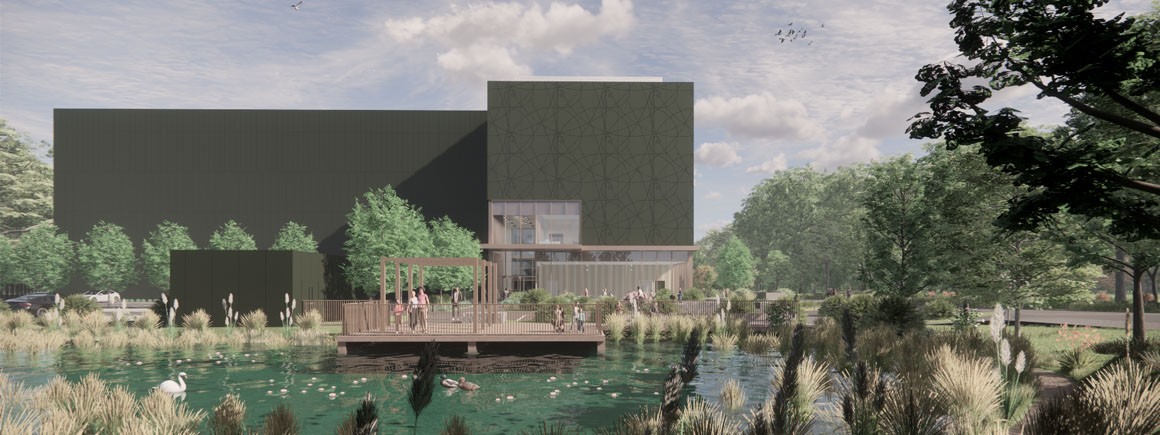
Wokingham Borough Council has approved plans for a new 25,000m² flagship site to house Natural History Museum collections.
A purpose-built facility at Thames Valley Science Park will eventually house 28 million specimens – the largest ever move of natural history specimens globally. This includes mammals, non-insect invertebrates (such as corals, crustaceans, molluscs and worms), fossils and molecular collections.
The site will include an imaging and analysis centre, including digitisation suites, molecular biology laboratories, including ancient DNA labs, cryo-facilities for tissue storage, conservation labs; and specimen preparation labs, including quarantine facilities.
Architects Feilden Clegg Bradley Studios are leading a consultant team including Ramboll, Grant Associates and Mace. Targeting a net-zero carbon building in construction and operation, the site’s energy strategy relies on the adoption of renewable sources of energy to offset the electricity demand of the building, including air-source heat pumps and solar PV panels.
The project aspires to deliver a Biodiversity Net Gain of 20 per cent, however this will extend beyond the site boundary, with additional habitat creation and restoration within the River Loddon corridor.
Simon Carter, Partner at Feilden Clegg Bradley Studios said: “The Natural History Museum’s collection is huge, diverse and of incredible value to the scientific community. In making a purpose-built facility for storage and conservation, in a world class working environment, we are realising the potential to make this collection an international resource for learning about climate change and how we can help the natural world as we go through this period of immense planetary change.
“The building itself is designed for the future, with longevity, durability and resilience underpinning the design. It is low energy, using the fabric to produce a stable environment reducing the underlying energy use. The materials are designed for the circular economy, providing benefits beyond the life of the building. Its setting – in parkland of native tree and shrubs, and wildflower rich grasslands – will increase the habitat available for wildlife, as well as being a space for staff to take breaks.”
The project is being funded by a £201 million government grant and is planned to be operational by 2031.
Picture: a CGI showing the proposed front of the facility, showing a view across a natural pond. Image Credit Feilden Clegg Bradley Studios architects, courtesy of Natural History Museum
Article written by Ella Tansley | Published 20 March 2024
The Campana Gallery at The Louvre is temporarily closed due to the fragility of the supporting beams in the south wing. The second floor of the south wing within the...
Read Full ArticleMitie will provide 24-hour security and customer services across four Tate locations, including Tate Britain and Tate Modern, in a new three-year...
Read Full ArticleSnowsfields Quarter, a new life sciences hub in south central London, will be located next to Guy’s Hospital. The site will include three new buildings,...
Read Full ArticleCorps Security will provide security services at The National Archives’ site in Kew. The National Archives is the UK government's official archive and...
Read Full ArticleConstruction has started on the new headquarters for the European Centre for Medium-Range Weather Forecasts in Reading. The site at the University of Reading...
Read Full ArticleFive architect-led teams have been shortlisted for The British Museum’s competition to reimagine over a third of its gallery space. Teams are competing to...
Read Full ArticleThe City of London Corporation has won a planning award for its role in developing a new home for the Migration Museum in the Square Mile. Planning permission was...
Read Full ArticleCould replacing natural gas with hydrogen in the brick-making process be the key to transforming the construction industry’s carbon footprint? The London Science...
Read Full ArticleBritish Land has sold 50 per cent of its stake in 1 Triton Square at Regents Place to Royal London Asset Management Property. The companies have formed a joint...
Read Full ArticleThe latest round of the government’s Museum Estate and Development Fund means that museums across England can apply for a share of £23.8 million for...
Read Full Article