.gif)

.gif)
Decarbonising Cities – Bristol’s Heat Network
In order to become a carbon-neutral city, Bristol is making radical changes to its heating network. Heat networks are commonplace in Europe, but less so in the UK....
Read Full Article

The Leading News & Information Service For The Facilities, Workplace & Built Environment Community
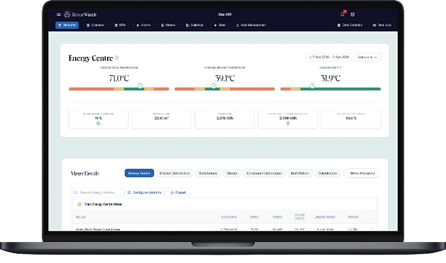
SAV, a provider of renewable and heat network technology, has launched RavenWatch, a new monitoring platform developed specifically around the challenges of operating UK heat networks.
RavenWatch provides a real-time view of network performance, allowing energy and building managers to identify problems earlier, prepare for HNTAS (Heat Network Technical Assurance Scheme) compliance and continually optimise how their networks operate.
The expected standards aim to ensure that heat networks across the UK meet higher standards of reliability and efficiency for consumers. At the same time, heat networks have come under Ofgem regulation for the first time, bringing consumer protection closer into line with other regulated utilities.
RavenWatch has been developed around these changing requirements and the practical realities of managing UK heat networks, with input from those working across the sector.
The dashboard provides network managers a simple view of the metrics that demonstrate where a network is performing as it should, where attention may be required and where there are opportunities to improve performance.
The software monitors key plant equipment including heat pumps, CHPs, electric boilers, gas boilers and other critical assets, alongside performance measures such as return temperature, heat loss, bypass and connectivity. It can provide analysis from an individual dwelling through to block, site and portfolio level.
Heat networks operate as interconnected energy systems that enable buildings and neighbourhoods to make use of large-scale, renewable, and otherwise wasted sources of heat that would simply not be available to individual homes.
With insights from RavenWatch, operators can make changes such as reducing temperatures and flow rates where appropriate, lowering heat losses and pumping requirements, improving the performance of heat generation and finding incremental savings throughout the system.
Those improvements can add up. In one 130-home scheme, monitoring identified two apartments with unusually high bypass flow. Correcting this reduced flow through the two apartments from around 130 litres per hour to an average of just 4 litres per hour.
The resulting reduction in heat loss was worth approximately £6,000 a year at a heat tariff of 15 pence per kWh – equivalent to around £46 for every dwelling on the network – before taking into account the additional reduction in pumping costs.
The move towards heat networks also moves much of the technical burden away from the consumer. Rather than relying on each resident to recognise that something is wrong and call a plumber, a network operator can increasingly identify poor performance centrally – sometimes before the resident is even aware of it – and can also identify opportunities to make an already functioning system perform better.
The launch comes as the UK begins a major expansion of heat networks as part of the transition away from individual gas boilers.
RavenWatch is available for all heat networks at a cost of £7 per meter per year. It currently encompasses 12,860 monitoring points across UK heat networks and, as coverage grows, will provide an increasingly detailed picture of how heat networks are performing across the country.
Lukas Fabricius, Product Manager at SAV said: “Heat networks can be considerably more efficient than the systems they replace, but that performance does not happen automatically. It comes from good design, good operation and the ability to understand what the network is doing. That is the gap RavenWatch has been designed to help close.”
Fabricius continued: “We wanted RavenWatch to take something technically complicated and make it useful. You should be able to open the dashboard and understand how your network is performing, where the opportunities are and what needs attention.”
Fabricius noted: “This is an important difference between a heat network and the status quo - hundreds of individual homes each operating their own heating system. A well-designed and well-operated heat network can perform far more efficiently because generation, distribution and demand can be considered together, rather than one property at a time.”
Fabricius highlighted: “Ensuring those benefits are actually realised for the people connected to the network is itself an important part of consumer protection. A network may have been designed to provide low-cost, low-carbon heat, but that promise depends on how well it continues to operate year after year.”
Fabricius explained: “The opportunity is not simply to fix things when they go wrong. Once you can see how a network is performing in detail, you can keep improving it. Small changes to flow, temperatures and operation can compound across hundreds of homes, steadily reducing the cost of running the network and, ultimately, the cost of heat for consumers.”
Fabricius concluded: “With individual boilers, we tend to think about maintenance as fixing something when it breaks. A heat network gives us the opportunity to think differently. With good data and proactive management, you can continually tune the system to perform better. That is where monitoring starts to become really valuable: not simply preventing waste, but finding opportunities to reduce the underlying cost of delivering heat.”
Picture: An image of the RavenWatch Dashboard on a laptop.
Article written by Dave Mapps | Published 10 September 2026
In order to become a carbon-neutral city, Bristol is making radical changes to its heating network. Heat networks are commonplace in Europe, but less so in the UK....
Read Full ArticleA new low-carbon infrastructure project will power the Houses of Parliament and the National Gallery. The South Westminster Area Network (SWAN) will be one of the...
Read Full ArticleThe Welcome Building, a 207,000 sq ft landmark in Bristol city centre, has reached its topping-out construction milestone. A joint venture between EPISO 5 and Candour,...
Read Full ArticleEquans, a subsidiary of the Bouygues group, is to sell its UK district heating and cooling network portfolio to a consortium formed by Swiss Life Asset Managers and...
Read Full ArticleEnergy Security Secretary Grant Shapps has announced several new energy management measures, including a commitment to carbon capture and the introduction of “Great...
Read Full ArticleNearly 29,000 homes and businesses will see lower carbon emissions and energy bills thanks to innovative heat network projects being backed by around £56 million of...
Read Full ArticleGreen Street in Glasgow, just a stone’s throw from COP26 will show that the only way to install 600,000 heat pumps a year and hit net zero is by replacing the...
Read Full ArticleAs the temperature dips and energy prices rise, Britain’s households aren’t the only ones feeling the pinch. According to The Telegraph,...
Read Full ArticleA new decarbonisation scheme that aims to encourage local authorities in England to retrofit buildings with low-carbon heating and insulation has launched. The primary...
Read Full ArticleA new study from tado° has found that UK homes had their daytime heating on 14 per cent more this winter in comparison to the previous winter. Despite financial...
Read Full Article