Facilities Management in 2026: Trends and Predictions
26 January 2026
Paul Bullard, Product and Professional Services Director at SFG20, the industry standard for building maintenance, has shared his insights regarding how the facilities management industry will continue to evolve in 2026 and the changes he believes will be particularly impactful for those working in the industry.
2025 highlighted how firmly regulatory change has taken hold across the facilities management sector. The Fire Safety Act 2021, the Building Safety Act 2022 and the Fire Safety (England) Regulations 2022 continued to redefine responsibilities, sharpen accountability and raise expectations around building safety and compliance. For facilities management professionals, these regulations have moved from implementation to enforcement, setting a clearer baseline that will shape priorities, investment and operational decision-making as the industry looks ahead to 2026.
1. Financial resilience becomes a core FM priority
Facilities management enters 2026 under sustained financial pressure. The SFG20 State of Facilities Management Report 2025 revealed that 75% of facility managers identified budget constraints as their biggest challenge in 2025, and 40% reported a budget decrease between 2024 and 2025. Financial strain is no longer a short-term issue but a defining feature of the operating landscape.
As a result, FM teams are increasingly required to demonstrate value beyond day-to-day delivery. Maintenance decisions are being scrutinised more closely, with greater emphasis on cost avoidance, asset life extension and risk reduction. In 2026, facilities management is less about how much is spent and more about how intelligently budgets are allocated.
This shift is driving a move toward whole-life costing, clearer prioritisation of statutory and high-risk assets, and more transparent reporting. Financial resilience is fast becoming a core FM skill, as organisations look to balance compliance, safety and performance within increasingly constrained budgets.
Compliance and safety remain top priorities, with 23% of facilities managers planning to increase investment in compliance and safety measures, despite continued budget pressure, according to last year’s ‘The State of FM Report’. At the same time, the volume and complexity of regulatory requirements are contributing to growing pressure across the sector.
As a result, 2026 is likely to see a continued shift toward optimised maintenance strategies. Rather than applying uniform regimes across all assets, FM teams are increasingly adopting a dual focus: meeting statutory obligations while strategically prioritising the critical assets that keep facilities operational. This optimised approach goes beyond pure compliance—it's about maintaining business continuity by directing maintenance spend toward the equipment and systems that are essential to day-to-day operations.
This allows organisations to make more proportionate and defensible decisions about resources, balancing safety and compliance with operational resilience and financial sustainability.
3. Digital transformation and AI move from objective to active application
Digital transformation remains a strategic priority across the FM industry, with half of organisations previously citing it as highly important. Over the past year, advances in artificial intelligence and data-led tools have accelerated this agenda, shifting the conversation from potential to practical application.
FM teams increasingly see AI as a decision-support tool, from predicting asset failure and prioritising maintenance activity, to identifying compliance risks before they escalate. Rather than replacing FM expertise, these tools can be used to support speed and productivity, helping teams make better use of limited time and resources.
However, challenges remain. Integration with existing systems continues to be a key barrier, with a fifth of FMs identifying it as a main obstacle to adoption. As 2026 unfolds, success in digital transformation will depend less on deploying new technology and more on ensuring systems work together, data is reliable, and teams have the skills to interpret and act on insights generated by AI.
4. Information governance and accountability under the spotlight
The concept of the ‘golden thread’ has been firmly established in recent years, but 2026 marks a turning point where information governance becomes a measurable compliance requirement, rather than an aspirational goal.
Asset owners, accountable persons and facilities managers are under increasing pressure to ensure building information is accurate, accessible and up to date throughout the asset lifecycle. Incomplete records, fragmented systems and unclear data ownership are emerging as material risks, particularly for higher-risk and complex buildings.
Last year’s report revealed that 37% of FM teams have an asset register that is at most 50% accurate, with a further 6% admitting to not having any asset register, spotlighting the ongoing inconsistencies across the sector.
As enforcement of the Building Safety Act continues to mature, maintaining reliable maintenance records and audit trails is no longer optional. 2026 will see a stronger focus on structured data management, consistent documentation practices and clear accountability for information accuracy across FM teams and supply chains.
5. Organisations will strive to close FM skills gaps
Alongside technological and regulatory change, the FM workforce continues to face increasing pressure. An ageing workforce, recruitment challenges and growing role complexity are contributing to a widening skills gap across the sector.
Facilities managers are now expected to navigate compliance frameworks, interpret data outputs, understand digital systems and support sustainability objectives — often alongside traditional technical responsibilities. This expanding remit is placing greater emphasis on training, competence and knowledge retention.
In 2026, organisations that invest in upskilling their FM teams will be better placed to manage risk and adapt to change. Developing digital literacy and regulatory awareness across the workforce will be critical to meeting the industry’s evolving demands.
Article written by Dave Mapps | Published 26 January 2026
Share
Related Articles
Chinese Businesses Commit To Over 2.5 Million Sqm Of Industrial And Logistics Space Across Europe
Chinese businesses have committed to more than 2.5 million sqm of industrial and logistics space across Europe since the start of 2024, reshaping demand across the...
Mercury Rising, Straw Dogs, Hot Fuzz, Top Guns, The Crown & Vikings
We've got an FM Digest so good you'd almost want to make a movie out of it. Mercury have taken the Almac contract; Elior are eliminating plastic straws; Tenon are...
Skanska has won a £240 million contract to construct 20 Ropemaker Street in Central London for Great Elm Assets Limited, in association with Old Park Lane...
The City of London Corporation has approved 1 Undershaft - AKA The Trellis - which will be the second tallest building in the Capital after The Shard and thus the second...
TfL To Make Capital’s Transport Services More Resilient, Reliable And Sustainable
Transport for London (TfL) has unveiled its updated Corporate Environment Plan1, which sets out how TfL will continue to take action to improve air quality, reduce carbon...
Fora Signs 46,332 Sq. Ft. Deal To Bring Flexible Workspace To Iconic 76 Southbank
Wolfe Asset Management Ltd has announced that flexible workplace provider Fora will operate a total of 46,332 sq. ft. at 76 Southbank, comprising a 38,332 sq. ft. office...
A Top Ten Guide To Making Your Venue More Accessible
Eight venues have received awards from the disabled access charity Euan’s Guide for their work welcoming disabled visitors – and this prompted ThisWeekinFM to...
Airline Company Guilty For Unsafe Operation of Passenger Lift
Flybe, the airline company, was sentenced on 4 February 2020 for the unsafe operation of a passenger lift. Meanwhile, a number of other firms have found themselves...
Report - CBRE and ThisWeekinFM recently lead a delegation of experts to provide a briefing on technology in workplace and real estate strategy.
The breakfast briefing...
Net Zero Rush-Through Criticised By Lords, Forum Claims
The Global Warming Policy Forum has claimed the House of Lords has rebuked the Government for rushing through a commitment to a Net Zero economy.
The Forum refutes the...
Beyond SCOP - Estimating Real World Heat Pump Performance With SPF
Rinnai Applied Head of Design Sean Ehlen evaluates the importance of heat pump system congruity utilising Seasonal Performance Factors (SPF) as the expected performance. Click Image To Read More
Energy Transition Update
ThisWeekinFM Guest Editor, Daniel Lynn, has picked a number of examples that demonstrate an international energy transition across separate regions of the globe. Click Image To Read More
Boat Party 2026 Highlights
9 July 2026
400 FM professionals gather on the River Thames. Learn More Here >>
2027 Date announced soon.
Are Heat Pumps Really The Future?
Rinnai Director, Chris Goggin, looks at how heat pumps being classified as a main solution towards decarbonisation compares to the direction of the UK’s low carbon heating and hot water technology market. Click Image To Read More
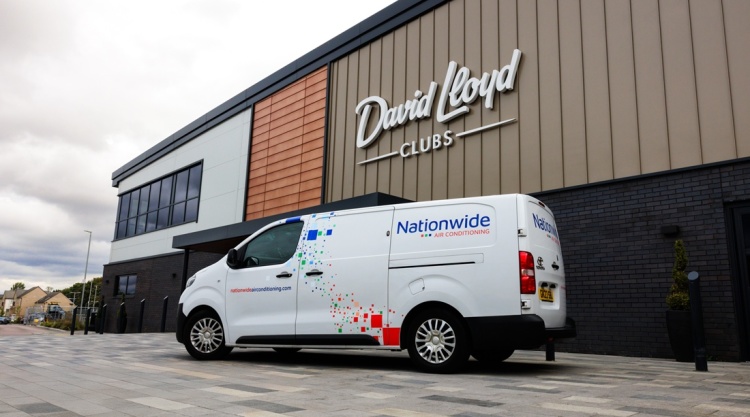
Nationwide Air Conditioning Extends David Lloyd Contract
Their 15-year partnership extended to cover Ireland, over 115 clubs and over 10,000 assets. Click Image To Read More

.gif)

.gif)