.gif)
.gif)

Net-Zero 2040 – What Exactly Are Sainsbury's Doing?
Following news of Sainsbury’s £1 billion commitment to become net-zero by 2040, programmes will be implemented across the Sainsbury’s business...
Read Full Article.png)

The Leading News & Information Service For The Facilities, Workplace & Built Environment Community
Eighteen Light Emitting Diode (LED) upgrade projects have been successfully delivered during year two (August 2025 – July 2026) of Imperial's 17-year Net Zero Programme. Delivered ahead of the original plan, these upgrades are projected to generate approximately 1.5 million kWh of annual energy savings, equivalent to around 1,600 tonnes of carbon savings over their lifetime.
These projects form a critical part of Imperial’s wider decarbonisation strategy. By reducing electrical demand across the estate, LED lighting upgrades directly support the electrification of heat, enabling the transition away from fossil fuels while also improving overall building energy efficiency, reducing operational costs, and supporting compliance with legislative requirements.
From the perspective of the Net Zero Programme, LED lighting has a defined critical success factor to deliver over 41% reduction in energy demand per fitting. This target has generally been exceeded across the completed projects, evidence of the effectiveness of building-scale interventions.
Collectively, these eighteen upgrades are expected to contribute 43% of the total calculated annual energy reduction and 19% of lifetime carbon emissions savings forecast across the Net Zero Programme for year two, playing a central role in early-stage decarbonisation delivery.
Beyond carbon and energy outcomes, the LED roll-out is also delivering important ancillary benefits which support Imperial’s Great Environment pillar of the Enabling Roadmap. Improved lighting quality enhances teaching, research and study spaces, while reduced heat gain and improved controls contribute to more comfortable, consistent indoor environments. These benefits support staff and student wellbeing, while helping to create high-performing, low-impact buildings across the estate.
Delivery has spanned multiple campuses, with some of the most impactful upgrades taking place within major academic buildings on the South Kensington campus, including Flowers, City and Guilds, and Electrical Engineering. These projects were delivered in partnership with industry suppliers Zumtobel, Signify and Whitecroft.
In parallel, 14 smaller buildings at the Silwood Park Campus have been progressively upgraded through a collaborative delivery model between Imperial’s in-house maintenance teams and delivery partner Electro.
For larger and more complex buildings, Imperial commissioned Arup’s specialist lighting team to develop building-specific upgrade specifications, integrating estate-wide standards with individual building requirements. This included progressive sustainability measures, such as the assessment of embodied carbon in line with industry best practice, alongside robust performance and reporting criteria.
The LED roll-out programme demonstrates how decarbonisation can transition from a strategic programme into a scalable, repeatable “business-as-usual” activity, delivering lower operating costs and an enhanced environment for students and staff.
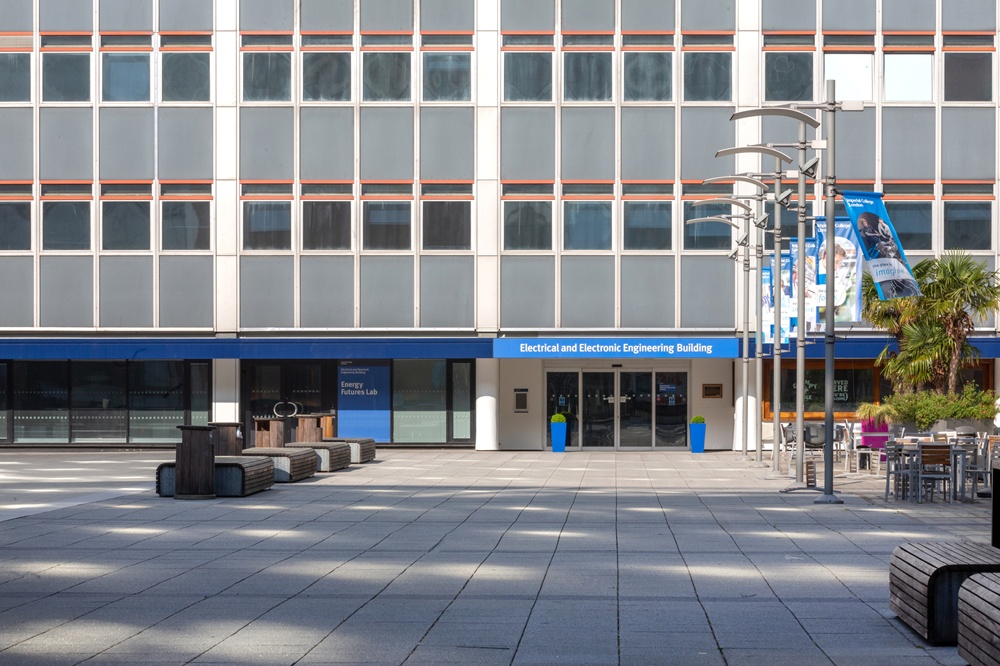
Picture: An image of the Electrical and Electronic Engineering Building at Imperial’s South Kensington Campus.
Article written by Dave Mapps | Published 27 July 2026
Following news of Sainsbury’s £1 billion commitment to become net-zero by 2040, programmes will be implemented across the Sainsbury’s business...
Read Full ArticleThe Building Research Establishment (BRE) – an international building science centre – has launched BREEAM Refurbishment and Fit Out Commercial Version 7...
Read Full ArticleTransport for London (TfL) has unveiled its updated Corporate Environment Plan1, which sets out how TfL will continue to take action to improve air quality, reduce carbon...
Read Full ArticleBuildings and their evidence can now be submitted for verification by Bureau Veritas, allowing robust Net Zero Carbon Aligned claims. The UK Net Zero...
Read Full ArticleWillmott Dixon has secured the £19.3 million first phase of Coleg Gwent's redevelopment of its Crosskeys Campus in Newport, transforming the site into a modern,...
Read Full ArticleCommercial and public buildings risk being left behind in the UK's transition to net zero despite more than £40bn of funding, investment and policy support...
Read Full ArticleIn the first of this three-part mini-series ThisWeekinFM speaks to Chris Goggin, Director of Operations at Rinnai UK, the world’s largest manufacturer of gas...
Read Full ArticleWork has started on Aston University’s Carbon Neutral Energy Centre which aims to transform how power is generated and used across the University. It is the...
Read Full ArticleThe £3.1 million scheme to decarbonise Arup’s headquarters at 8 Fitzroy Street is now complete. Dalkia has delivered the validation, detailed coordination,...
Read Full ArticleCan the built environment unlock substantial carbon savings by scrutinising mechanical, electrical and plumbing systems? Max Gibbens, Senior Environmental Consultant...
Read Full Article